In Dubai, United Arab Emirates, it has been reported that Iran imposed an additional prison sentence on Nobel Peace Prize laureate Narges Mohammadi, extending her confinement by over seven years. This development follows her initiation of a hunger strike, as the Iranian government intensifies its crackdown on dissent in response to recent nationwide protests and the subsequent fatalities attributed to security forces.
Mohammadi’s new sentence comes at a time when Iran is negotiating with the United States concerning its nuclear program, amidst the backdrop of a military threat from former President Donald Trump. Iran’s top diplomat emphasized that Iran’s strength lies in its capability to “say no to the great powers,” adopting a firm stance shortly after negotiations in Oman with the U.S.
According to Mohammadi’s legal representative, Mostafa Nili, a Revolutionary Court in Mashhad handed down the sentence, with the court’s process typically involving limited opportunities for defendants to contest charges. Nili outlined that Mohammadi was sentenced to six years for “gathering and collusion,” an additional one and a half years for propaganda, and a two-year travel ban. There is also a two-year internal exile to Khosf, about 460 miles southeast of Tehran.
Agnes Callamard, the secretary-general of Amnesty International, commented on the situation by noting that Mohammadi’s sentence is indicative of the growing lethal repression against protestors and dissenters in Iran.
While Iranian authorities have not publicly acknowledged the verdict, it has been reported that Mohammadi commenced a hunger strike on February 2, ending it after her sentencing due to deteriorating health conditions. She was initially arrested at a ceremony for Khosrow Alikordi, an Iranian lawyer and human rights advocate. During the event, footage captured her demanding justice for Alikordi and others.
Before her December arrest, supporters cautioned that Mohammadi, aged 53, risked re-incarceration following her medical furlough, initially intended for three weeks. Her release period extended, possibly due to international pressure, including from Western powers. Throughout this period, she continued her activism, even amidst a 12-day conflict in June between Iran and Israel, and participated in international media engagements and public protests, once even demonstrating outside Tehran’s notorious Evin Prison.
Mohammadi was previously serving 13 years and nine months due to charges related to state security and anti-government propaganda. She was also an advocate for the 2022 protests following Mahsa Amini’s death, which saw women openly defy the government by refusing to wear the hijab.
While imprisoned, Mohammadi experienced multiple heart attacks and required emergency surgery in 2022. Her lawyer, speaking in late 2024, revealed concerns over a bone lesion potentially indicating cancer, which was later removed. Nili expressed expectations that Mohammadi might be temporarily released on bail for treatment.
The Iranian government’s stance on dissent shows signs of becoming increasingly stringent. Iranian judiciary chief Gholamhossein Mohseni-Ejei alluded to the likelihood of severe sentences for offenders, mentioning those previously aligned with the revolution who now face repercussions for their current declarations against the state.
The news of Mohammadi’s sentencing coincides with Iran’s Foreign Minister Abbas Araghchi indicating that Iran remains resolute on its uranium enrichment stance, a major dispute point, especially with the U.S. Former President Trump previously targeted Iranian atomic sites during the Iran-Israeli conflict. Meanwhile, Israeli Prime Minister Benjamin Netanyahu is anticipated to visit Washington, with discussions expected to heavily feature Iran.
 Protests Erupt in Albania Over Resort Development
  Clarity Sought on U.S. Troop Levels in Europe Amid Policy Changes
  U.S. Military Awaits Pentagon’s Clarification on Troop Levels in Europe
  Potential Ebola Outbreak in Central Africa Raises Concerns of Rapid Spread
 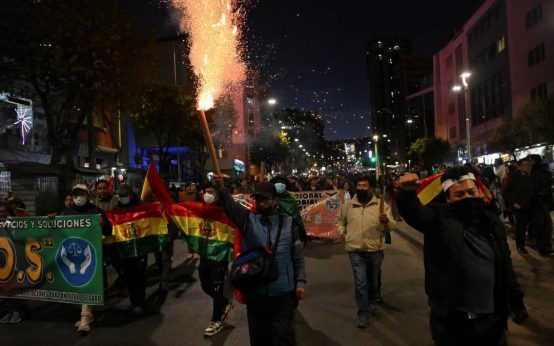 U.S. and Allies Condemn Efforts to Overthrow Bolivian Government
  Pamela Hicks: Cousin, Bridesmaid, and Witness to History