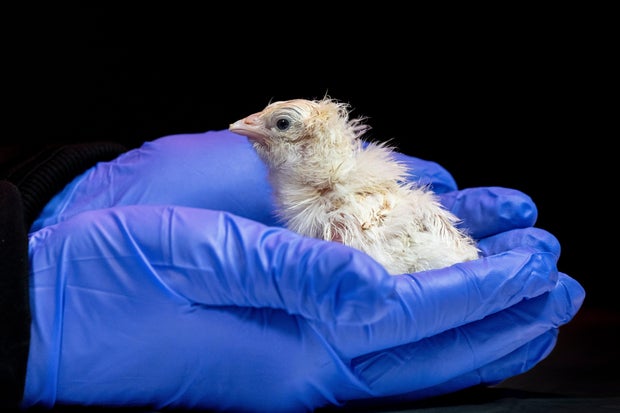
A biotech company committed to bringing back extinct species reported hatching live chicks in an artificial setting. Colossal Biosciences detailed this experiment, which has drawn mixed reactions from the scientific community.
Chicks Born from Artificial Eggshell
Colossal revealed that 26 chicks were birthed using a 3D-printed structure mimicking an eggshell. This innovation continues their efforts to create animals resembling extinct species, such as long-haired mice resembling woolly mammoths and dire wolf-like pups.
CEO Ben Lamm stated the goal is to develop a scalable artificial egg technology. He envisions future applications such as genetically modifying birds to resemble the giant moa of New Zealand, whose eggs are significantly larger than those of chickens.
Scientific Scrutiny
Scientific experts commend the technology yet express skepticism. They point out the absence of several key components necessary for a full artificial egg. Evolutionary biologist Vincent Lynch argues these efforts yield genetically modified birds, not a true revival of extinct species.
To hatch the chicks, fertilized eggs were introduced to an artificial system and placed in incubators. The process involved calcium supplements, and researchers tracked embryonic development in real time. The eggshell design permits oxygen flow, akin to nature, but lacks essential nourishing organs.
“It’s not an artificial egg because you’ve added all the parts that make it an egg,” said Lynch.
Past Efforts and Future Plans
Previous research utilized less advanced methods, such as transparent plastic films, to study avian development. Investigating these processes offers insights for understanding other species’ growth, including humans.
Scientist Nicola Hemmings notes that hatching a chick from an artificial vessel isn’t entirely new. However, Colossal aims for larger ventures, like the moa’s resurrection, requiring thorough genetic comparison and a sizable eggshell.
The company doesn’t want to delay efforts until ready for the giant moa; instead, they focus on solving engineering challenges related to surrogacy and birth.
Ethical and Environmental Concerns
Bioethicist Arthur Caplan raises concerns about the potential habitat for such revived species. He questions their survival in modern landscapes radically different from their original environments.
Nurturing presently endangered species rather than reviving extinct ones might be more practical, according to Hemmings. Conservation through preserving the sperm and eggs of living species might prove more feasible.
Colossal stresses that their technology holds immediate value for bird species, which face significant population declines globally. They claim this platform can aid fragile embryos and potentially restore species from preserved genetic material.
Colossal made headlines in 2021 with plans to bring back the woolly mammoth and later the dodo. By 2024, they claimed progress in resurrecting the Tasmanian tiger. These efforts promise wild possibilities, broaching the line between science fiction and reality.
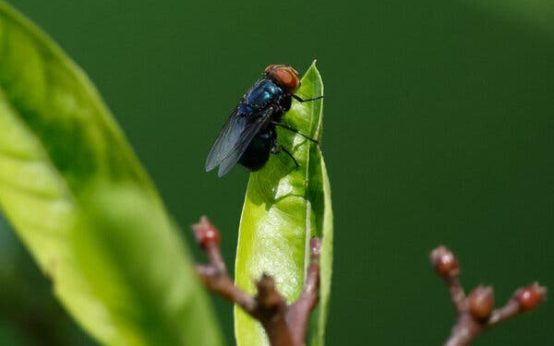 Flesh-Eating Fly Returns to the United States Causing Concern
 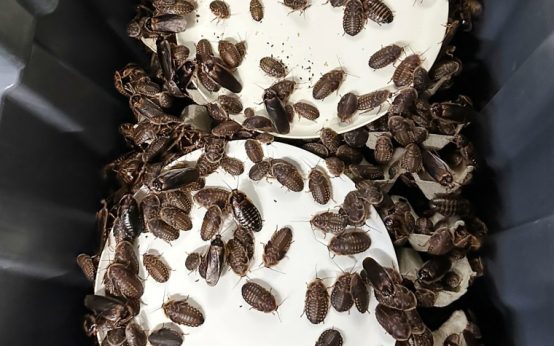 Australia’s Largest Seizure of Exotic Invertebrates: Over 100,000 Cockroaches Confiscated
 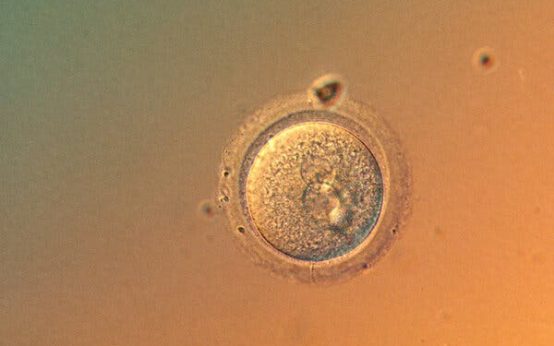 Gene Editing in Human Embryos at Columbia University
  NASA Declares MAVEN Spacecraft Dead After a Decade of Mars Observations
  Figure AI Signs Agreement with Catalyst Brands for Humanoid Robot Deployment
  Trump’s Executive Order Initiates Oversight Framework for AI