
Scientists recently revealed that Neptune’s distant moon, Nereid, might be the final survivor among the original moons that orbited the planet. Neptune, the eighth and most distant planet in our solar system, is circled by sixteen known moons. Triton, the largest of these moons, arrived from the frozen outer regions of the solar system billions of years ago. Its arrival caused chaos, leading to collisions that destroyed many of Neptune’s original moons.
Researchers from the California Institute of Technology employed NASA’s Webb Space Telescope to examine Nereid. Their findings indicate that, unlike Triton, Nereid managed to endure by occupying a highly elongated orbit around Neptune. Matthew Belyakov, a study author from Caltech, noted that despite its size, Nereid remains underexplored. The only spacecraft to visit Neptune was NASA’s Voyager 2 in 1989. Nereid was first identified 40 years earlier by Dutch astronomer Gerard Kuiper and was named after sea nymphs from Greek mythology.
Nereid spans about 220 miles (350 kilometers) across and follows an unusual orbit for a moon. Its journey around Neptune takes nearly an entire Earth year. During this orbit, it swings as close as less than 1 million miles (1.4 million kilometers) from Neptune, and then drifts as far as 6 million miles (9.6 million kilometers) away.
There was long-standing speculation that Nereid might have migrated from the Kuiper Belt, a cold region situated beyond Neptune. However, the Webb telescope’s findings show Nereid’s composition includes excessive ice compared to typical Kuiper Belt objects. This implies that Nereid has always been a part of Neptune’s system.
Belyakov highlighted that there is little evidence remaining around Neptune, as the system now has fewer moons. The latest data firmly dispel the notion that Nereid was just another wanderer captured by Neptune’s gravity. These findings were published in the journal Science Advances.
“This is an intriguing result,” remarked Carnegie Science planetary astronomer Scott Sheppard, who did not contribute to the study. The data verifies, for the first time, that Nereid’s unique orbit fits the expected history of a moon originally formed near Neptune before being displaced during Triton’s arrival.
Belyakov and his team propose that Neptune’s closest moons likely formed from the remnants of the original moons destroyed by Triton. The other three giant planets in our solar system boast more moons, with Saturn having the most at 292.
Scientists believe a future spacecraft visit could provide definitive insights into the origins of Neptune’s moon system. However, no such missions are currently planned.
Support for The Associated Press Health and Science Department comes from the Howard Hughes Medical Institute’s Department of Science Education and the Robert Wood Johnson Foundation. The Associated Press is entirely responsible for its content.
 Flesh-Eating Fly Returns to the United States Causing Concern
  Australia’s Largest Seizure of Exotic Invertebrates: Over 100,000 Cockroaches Confiscated
 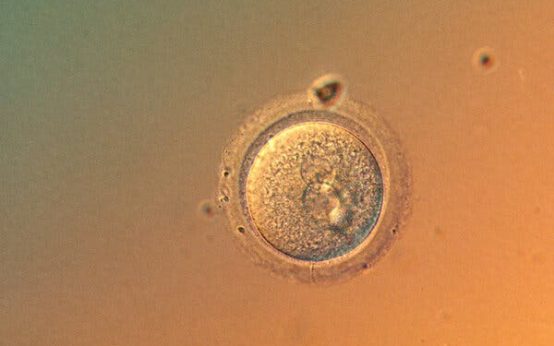 Gene Editing in Human Embryos at Columbia University
 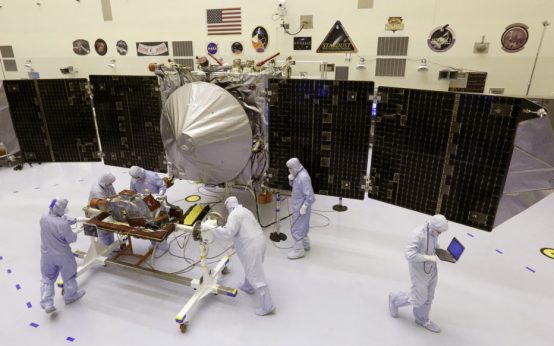 NASA Declares MAVEN Spacecraft Dead After a Decade of Mars Observations
  WHO Reports Reduction in Suspected Ebola Cases in Central Africa
 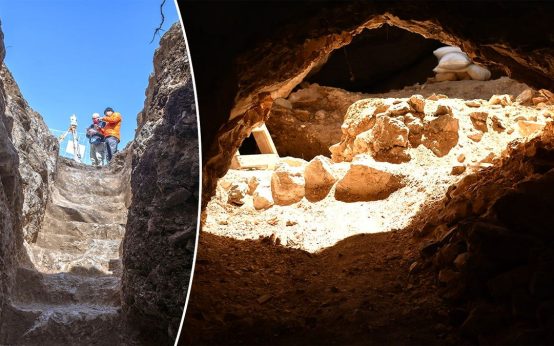 Ancient Tunnel Discovery Near Jerusalem’s Ramat Rachel