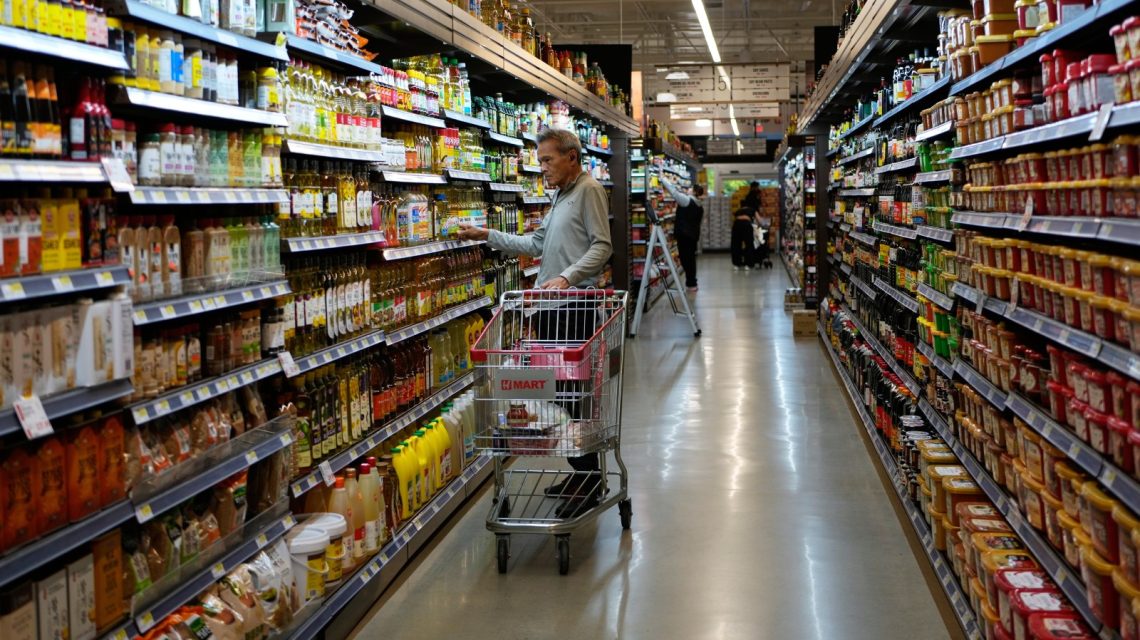
Food prices in the U.S. are likely to rise sharply due to increasing oil prices and supply disruptions linked to ongoing conflict. This situation places pressure on companies and farmers responsible for maintaining stocked shelves.
Economic Impacts of Oil Price Surge
According to economist Justin Wolfers, oil is currently the primary concern, with food being the next significant issue. Since the conflict began on February 28, oil prices have increased by over 50%, raising the national average gas prices to over $4.50 for the first time since 2022.
Farmers are now contending with elevated fertilizer costs, rising fuel expenses, tariffs, and a diminishing workforce. These challenges suggest a major price increase may occur at grocery stores rather than gas pumps.
Current Trends in Food Price Increases
Prior to the conflict, persistent inflation on certain food staples strained household budgets in the U.S. The Bureau of Labor Statistics reported an increase in the annual headline inflation rate from 3.3% in March to 3.8% in April, the highest level across both of Donald Trump’s terms.
The energy index has seen a 17.9% rise since April 2025, with a 3.2% increase in the food index. Food at home, or grocery prices, increased by 0.7% in April—the largest one-month rise since early 2022—with a yearly increase of 2.9%.
Disruptions in the Strait of Hormuz, which remain largely closed despite negotiation efforts, indicate potential for further adverse impacts on grocery prices.
Influence of the Conflict on Grocery Costs
The Hormuz Strait handles about a third of the world’s seaborne fertilizer trade. This disruption has increased U.S. fertilizer prices by about 20%, as reported by the Green Markets Weekly North America Fertilizer Price Index. The World Bank predicts global fertilizer prices will rise by 31% in 2026, significantly affected by a 60% rise in urea prices, causing financial stress for farmers and threatening future crop production.
While poorer nations might be hit hardest, U.S. farmers are voicing concerns during the crucial planting season. A survey by the American Farm Bureau Federation in April revealed 70% of farmers are unable to afford all necessary fertilizers, a problem compounded by a 46% rise in farm diesel costs since the conflict started.
The Department of Agriculture has adjusted food price forecasts for 2026, but some experts say the conflict’s full impact has not yet been realized. Cornell University economics and agriculture professor Chris Barrett expects noticeable effects by late summer, continuing to grow in fall and winter due to reduced harvests in India, Thailand, and Vietnam.
Barrett predicts food price inflation could reach around 11% by the end of 2026, posing challenges for many American families.
Agricultural economists Ken Foster and Bernhard Dalheimer from Purdue University note that pre-conflict conditions already increased food prices. Current price shocks surpass just fertilizer costs, affecting transport, packaging, and refrigeration.
They stress that while price impacts are slow to emerge, they will be even slower to diminish. Food affordability risks are high, especially for low-income families, as accumulated supply chain costs continue to drive retail prices higher.
Outlook for Food Prices
The conflict shows few signs of ending soon, with both sides skeptical of each other’s negotiation demands. On Wednesday, President Trump indicated he is in “no hurry” for a deal with Tehran, though open to a limited agreement to reopen the Strait of Hormuz.
Foster and Dalheimer highlight that the war’s impact on food prices will depend largely on how long the Strait remains closed to commercial shipping.
 Judge Overturns Trump-Era Immigration Policies
  Lawsuits Against Federal Government Following Pennsylvania Rally Shooting
  New Jersey Struggles with Protests Near Immigration Detention Center
  Newark Scales Back Police Presence at Detention Center Protests
  Investigation into Bus Company’s Network and Safety Violations
  Inflation’s Rise Challenges Economists’ Claims