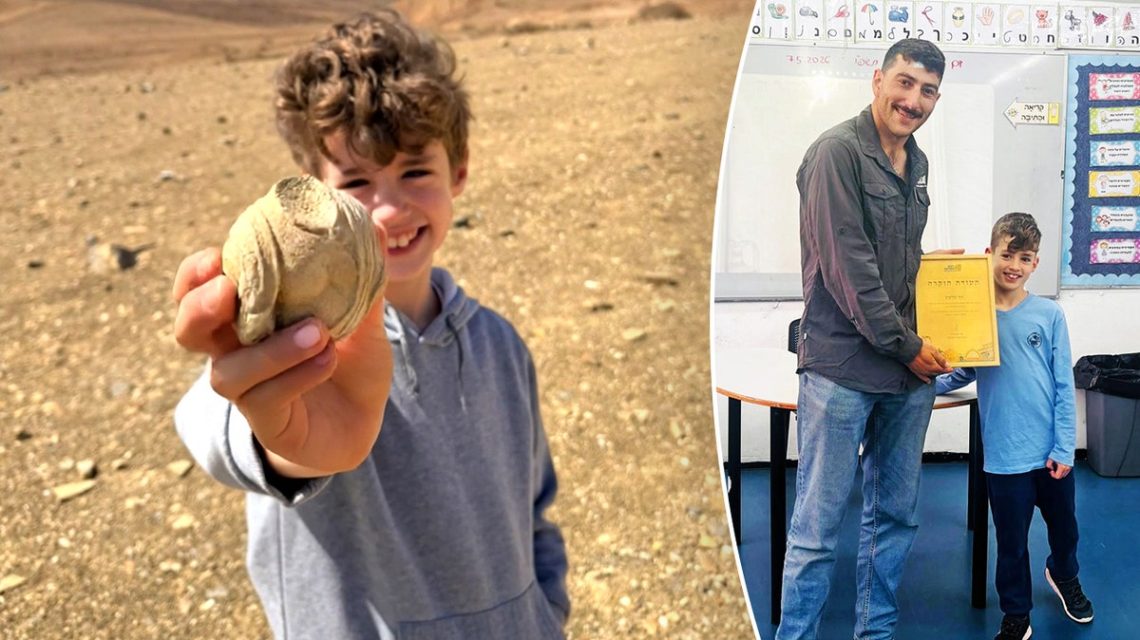
An 8-year-old boy in Israel recently made a remarkable discovery during a family trip. Dor Wolynitz, from Rehovot, Israel, found a 1,700-year-old Roman statuette fragment in the Ramon Crater, located in the Negev Desert in southern Israel. This exciting find was announced by the Israel Antiquities Authority (IAA) in a release dated May 11.
According to Wolynitz, he was keen on finding special objects during his visit. He said, “Suddenly, I noticed an interesting stone with stripes lying on the ground, and picked it up.” The ancient artifact was discovered while attending a family weekend retreat organized by a paratrooper reserve unit.
Upon finding the stone, Wolynitz showed it to Akiva Goldenhersh, an archaeologist and family friend present on the trip. The artifact measures six by six centimeters and depicts a human figure with intricately sculpted fabric folds, as reported by Goldenhersh, who supervises the IAA’s Antiquities Theft Prevention Unit.
Goldenhersh initially thought the object might be a fossil but quickly realized its significance upon noticing the precisely sculpted folds, which indicated fine craftsmanship.
Made from a phosphorite-type mineral, native to the Negev region, experts believe the fragment was locally produced, rather than imported. It depicts a figure wearing a heavy mantle known as a himation, without any visible undergarment.
Researchers suggest the small sculpture may represent the Roman god Jupiter or Zeus-Dushara, a deity worshipped by the Nabateans. The artifact possibly reflects a blend of local traditions and classical influences, according to Goldenhersh.
The location of the find, Ramon Crater, lies along the ancient spice route, an area known for cultural interactions and trade between the Roman and Nabatean periods.
Finding such Roman-era stone figurines is deemed rare, especially as surface finds rather than through controlled excavations. Goldenhersh remarked that the fragment likely shifted over time due to erosion or natural movements, further noting that Negev’s desert conditions can help preserve artifacts.
In recognition of his discovery, Wolynitz handed the artifact over to the National Treasures Department of Israel. He was issued a certificate for displaying good citizenship and alerting authorities about the find.
Goldenhersh praised the boy’s responsible actions, stating, “The responsible conduct of Dor and his family is an example of proper civic responsibility and the preservation of our country’s cultural assets.” Dor’s actions serve as an inspiring model for others.
 YouTuber Shares Difficult Decision After Trisomy 21 Diagnosis
  The Changing Dynamics of Celebrity Reputation in 2026
  Robbers Sentenced for Theft of Romanian Treasures from Dutch Museum
  YouTuber Sparks Debate Over Abortion Rights and Down Syndrome
  Celebrate America’s 250th Birthday with Commemorative Products
  Significant Events in Chicago on June 5