
In 1971, America’s fascination with automobiles extended beyond Earth when the Apollo Lunar Rover enabled astronauts to traverse the moon. This remarkable vehicle allowed them to explore over 50 miles of the lunar surface.
Jaret Matthews, CEO of Astrolab, explained the difference between the Apollo Lunar Rover and today’s designs. “The Apollo Lunar Rover was a phenomenal machine, but fundamentally it had a very different job to do than the one we’re doing,” Matthews stated.
In Hawthorne, California, Matthews showcased a modern prototype of Astrolab’s lunar rover called FLEX. Resembling a Zamboni, this 21st-century vehicle is expected to look like a four-wheel drive electric vehicle. The final design will feature autonomous capabilities or the ability to carry two astronauts and their equipment. It aims to operate for a year, covering hundreds of miles on the moon.
These lunar terrain vehicles combine the ability to transport astronauts, like the Apollo Rover, with advanced technology similar to Mars’ Perseverance Rover. Matthews emphasized the importance of remote operation from Earth.
Astrolab and Lunar Outpost are the two companies chosen by NASA to create the initial rovers for a future lunar base. This base, planned for development near the moon’s south pole over the next seven years, will feature vehicles funded by NASA with $220 million awarded to each company. Lunar Outpost’s moon buggy is named Pegasus.
NASA unveiled a $20 billion plan for the lunar base. However, a recent test of Jeff Bezos’ Blue Origin New Glenn Rocket at Cape Canaveral resulted in an explosion. This rocket’s role in the Artemis moon program, particularly in transporting rovers to the lunar surface, makes the impact of this setback uncertain.
Despite this challenge, Lunar Outpost CEO Justin Cyrus highlighted a broader potential on the moon. “NASA wants to be one of many customers,” Cyrus explained. “NASA doesn’t want to be the only customer. And the only way you can do that is creating a vehicle that is truly capable enough to allow for new activities on the lunar surface.”
 Flesh-Eating Fly Returns to the United States Causing Concern
 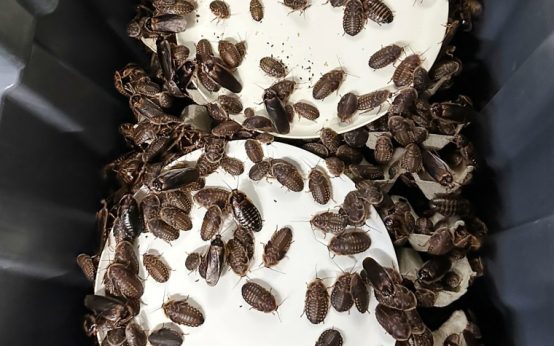 Australia’s Largest Seizure of Exotic Invertebrates: Over 100,000 Cockroaches Confiscated
 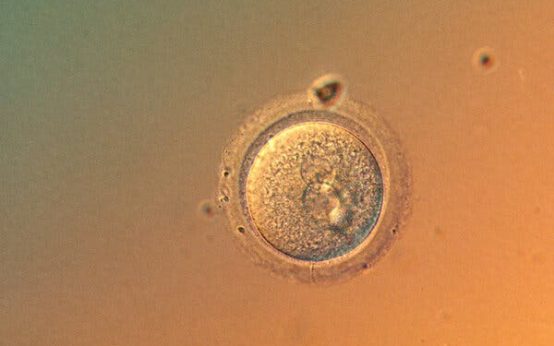 Gene Editing in Human Embryos at Columbia University
 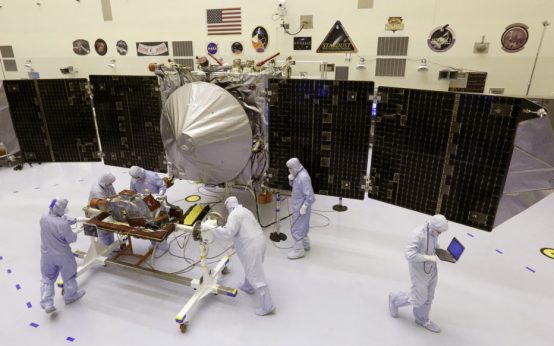 NASA Declares MAVEN Spacecraft Dead After a Decade of Mars Observations
  Blue Origin Recovers from New Glenn Rocket Explosion
  WHO Reports Reduction in Suspected Ebola Cases in Central Africa