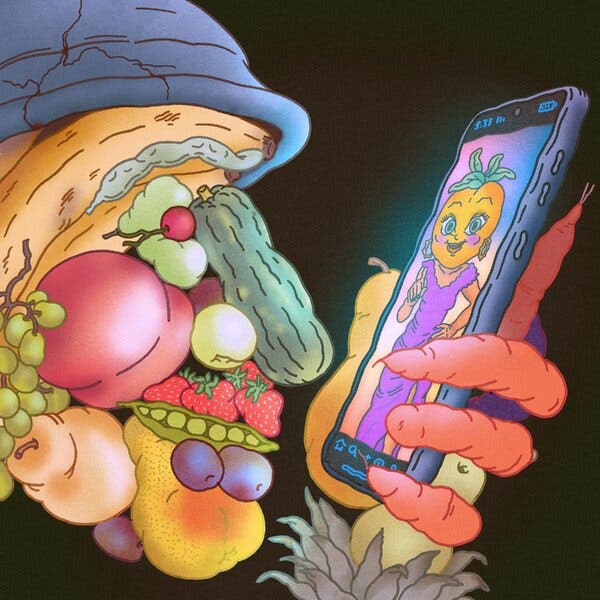
In March, an intriguing phenomenon emerged on TikTok: a series titled “Fruit Love Island” was released by the account ai.cinema021. This show, generated by artificial intelligence and centered around humanoid fruit in a dating setting, captivated audiences. These fruit characters were designed with exaggerated features, like heavily muscled bodies or large breasts, and spoke dialogue that felt strangely clichéd. An example of their peculiar exchanges includes:
Bananito: I’m here to have fun and probably break a few hearts.
Orangelo: [Laughs.] Bro said the quiet part out loud.
Despite its many continuity errors, such as fruits appearing in new outfits from scene to scene, the series resonated on the internet. It went viral to the point where each episode amassed over 10 million views. As a result, it inspired similar series like “Fruit Paternity Court” and tales about a pregnant broccoli.
The widespread popularity of “Fruit Love Island” proposes a couple of possibilities: either it was loved and shared by viewers or it incited negative reactions, prompting them to share it out of frustration. The pervasive attraction it garnered can be attributed to an algorithm that picked up on the interest and propagated its reach globally.
For many, “Fruit Love Island” marked a low point in internet culture. This sentiment was echoed in critiques like a BBC News headline stating, “Think ‘Love Island’ Is Bad? Wait Until You See the A.I. Fruit Version.” It mimicked the shallowness of reality TV yet reduced to suit shorter attention spans, making it suitable for consumption across diverse media.
Amid the sea of A.I.-generated content known as slop, this kind of material has inundated social media. From bizarre creations like shrimp Jesus to incremental monsters, these images or videos collectively evoke disdain. Identifying something as A.I.-crafted often turns people against it. Despite this, the omnipresence of such content can foster a shared cultural experience — a resurgence of monoculture.
Monoculture once culminated during the era of network television, from the 1950s through the 1990s, when millions watched the same channels nightly. Before on-demand viewing, everyone consumed the same entertainment simultaneously. While these programs aimed to capture large audiences, they often lacked artistic depth.
This collective experience has largely dissipated in today’s personalized digital landscape. Yet, ironically, A.I. slop is unintentionally re-establishing a societal baseline for shared cultural media, reviving aspects of monoculture.
 Debate Surrounds Nick Bilton’s Qualifications to Lead ’60 Minutes’
  YouTuber Shares Difficult Decision After Trisomy 21 Diagnosis
  The Changing Dynamics of Celebrity Reputation in 2026
  Robbers Sentenced for Theft of Romanian Treasures from Dutch Museum
  YouTuber Sparks Debate Over Abortion Rights and Down Syndrome
  Celebrate America’s 250th Birthday with Commemorative Products