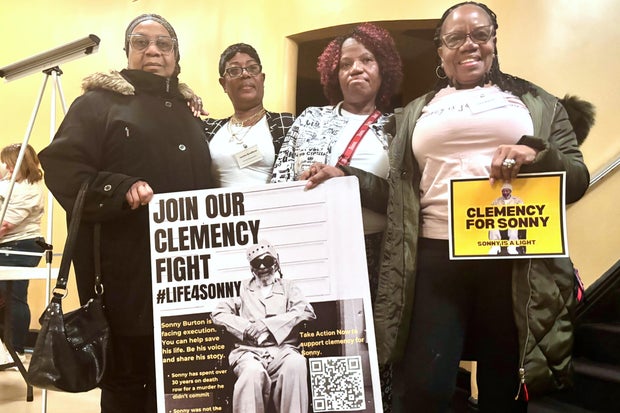
Alabama has set a March execution date for Charles “Sonny” Burton, who was sentenced to death for his role in a 1991 robbery that resulted in a fatal shooting, even though he did not directly participate in the killing. Governor Kay Ivey announced plans for the execution to take place on March 12, utilizing nitrogen gas. The case has sparked controversy as Burton, 75, was convicted as an accomplice, not the actual gunman.
The shooting took place on August 16, 1991, during a robbery at an auto parts store in Talladega, which resulted in the death of Doug Battle, a customer. Although Burton was not physically present in the store at the time of the murder, he was portrayed by prosecutors as the mastermind behind the crime, leading to his death sentence. Derrick DeBruce, the individual who fired the gun, ultimately received a reduced sentence and passed away in prison.
“We are very disappointed that Governor Ivey has opted to set an execution date for Mr. Burton. But we hope and pray that she, like Oklahoma Governor Stitt did in November, still changes her mind and stops this unjust execution of a man who has never taken a life,” said Matt Schulz, Burton’s attorney.
Advocates, including one of the victim’s children and some jurors, have urged the governor to reconsider and grant clemency. They argue it is unjust to proceed with Burton’s execution when the actual triggerman received a lesser punishment. In her notification to the prison commissioner, Governor Ivey stated she currently has no intention of granting clemency but retains discretion to grant a reprieve or commutation prior to the execution if deemed necessary.
The office of Alabama Attorney General Steve Marshall has opposed the clemency petition, asserting the upholding of Burton’s conviction and death sentence at every level. A spokesman for the office highlighted an earlier statement, noting the unanimous recommendation for capital punishment by the jury in April 1992.
In 2015, the state argued in court that it would be “arguably unjust” to affirm a death sentence for Burton over DeBruce. Support for clemency comes from various quarters, including six of the eight surviving jurors, three of whom assert that they would not have recommended the death penalty for Burton had they known the shooter would receive a lighter sentence. Priscilla Townsend, one of the jurors, explained in a phone interview the oversize role emotions played in the trial.
Townsend, who still supports the death penalty for extreme cases, believes Burton’s case does not fit the criteria. Reflecting on the trial, she expressed regret for her role in the sentencing, acknowledging increased understanding over time. In an essay for AL.com, Townsend explained how the prosecution’s labeling of Burton as a “ringleader” influenced her and other jurors’ perceptions, and ultimately, the outcome of the trial.
The American Civil Liberties Union notes that laws in 27 states permit capital punishment for those involved in felonies leading to deaths, even if they did not directly cause the fatalities.
 Ex-CIA Official Detained Over Possession of Gold Bars Worth $40 Million
  High Tensions Escalate in Texas Teen’s Murder Trial
  Acquitted Woman Sues Massachusetts Police Over Alleged Misconduct
  Autopsy Reports of University of Idaho Victims Unsealed
  Legal Battle Over Ryne Sandberg’s Trust
  Karen Read Files Lawsuit Against Massachusetts State Police and Canton