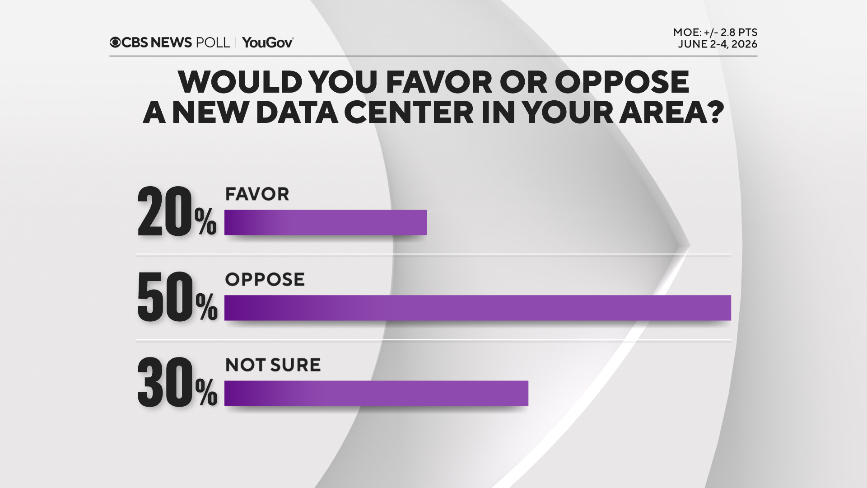
Many Americans express skepticism about establishing a data center in their vicinity. Concerns primarily stem from perceived negative impacts on the environment and local resources.
The U.S. has seen an increase in data center construction recently. However, most Americans admit they lack substantial knowledge about these facilities. This unfamiliarity contributes to wariness about having a data center nearby.
Generally, more than twice as many Americans oppose as favor the construction of new data centers locally. Many remain uncertain. Among those claiming significant awareness, 16% acknowledge potential benefits, yet most still oppose a local data center.
Many who know little about data centers express uncertainty about having one in their area.
The nation is divided on whether additional data centers are essential for the U.S. to maintain competitiveness in technology and AI. Those in favor of local data centers tend to believe they are crucial for the U.S. to compete internationally.
More Republicans than Democrats view data centers as necessary for competitiveness, but many remain hesitant about having one locally. Majorities feel data centers negatively affect the environment, resources like water and electricity, and increase local energy costs.
On a positive note, slightly more Americans perceive data center construction as beneficial for the local economy and tax revenue. Individuals anticipating these advantages tend to support rather than oppose a local data center.
Regarding employment, half believe data centers can boost local job numbers short-term, yet fewer see long-term benefits. On these issues, large percentages express uncertainty, highlighting a lack of familiarity with data center impacts among Americans.
This CBS News/YouGov survey included a nationally representative sample of 2,023 U.S. adults interviewed from June 2-4, 2026. The sample was weighted for gender, age, race, and education, as per the U.S. Census American Community Survey and Current Population Survey, alongside the 2024 presidential vote. The margin of error is ±2.8 points.
 Trump’s Plan for AI Company Stakes
  Protecting Against Impostor Bank Scams: Key Insights
  FCC Proposal Could Increase Phone Identity Checks
  Tech Companies’ AI Spending and Investor Concerns
  Alibaba Challenges Pentagon’s Allegations
  Tech Stocks Under Pressure Amid AI Investment Concerns