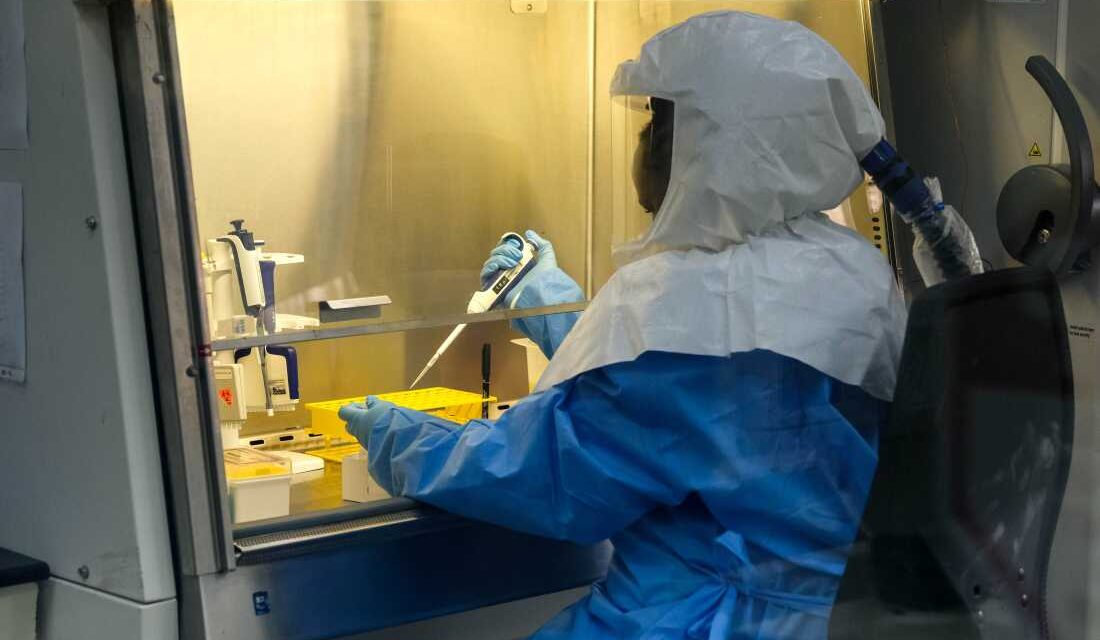
Sophia Mulei, a laboratory technologist, conducts her work at the Viral Hemorrhagic Fever Laboratory in Uganda. This lab plays a crucial role in testing Ebola samples and is part of the Uganda Virus Research Institute in Entebbe, Uganda. It acts as one of the main centers for these operations.
By mid-April, health officials in the Democratic Republic of Congo (DRC) expressed concern over possible Ebola cases. Deaths in the country’s northeastern region seemed linked to the virus, prompting officials to collect and send samples to a lab in Bunia for analysis. Jean-Jaques Muyembe, the general director of INRB, DRC’s national biomedical research center, stated, “The first samples were tested on April 30th.” The lab used a GeneXpert machine, which automates detection of viral DNA. Results were negative initially, but later samples confirmed a positive presence for Ebola. However, GeneXpert failed to detect the rare species circulating, causing a delay in response.
The outbreak was declared in mid-May, and it grew quickly. Suspected cases rose to over 1,100, overwhelming labs with samples. Caia Dominicus, a senior technical adviser for the International Pandemic Preparedness Secretariat, noted that the response was hindered by inadequate local diagnostics. Without timely testing, isolating patients and stopping the virus’s spread became challenging.
Improved Diagnostic Capacity
Abdirahman Mahamud of the World Health Organization (WHO) attributes improved diagnostic capacity to new technologies. “Diagnostic capacity has improved significantly,” he said, noting that the backlog had mostly been resolved. Yet, he cautioned that testing capacity might not suffice if the outbreak reaches the projected 20,000 cases by August. Mahamud stressed the need for further support should transmission or cases increase.
Aiding Diagnostics With New Technology
A crucial advancement is the RADI-One machine. This device simplifies detection of Bundibugyo in samples and requires minimal training, making it suitable for smaller clinics near outbreak sites. Seven labs, including a mobile unit, can now process tests throughout northeastern DRC. Larger labs, such as the one in Bunia, handle over 100 daily samples. A technician from this lab, who wished to remain anonymous, stated, “Right now, we really don’t have a backlog… turnaround time is basically one to twelve hours.”
Africa CDC aims to have 50 RADI-One machines by June’s end, cooperating with WHO and DRC officials. Yet, Dominicus noted that the need for more machines and other tests persists. Additionally, lab-based testing presents logistical challenges, such as transporting samples from patients to labs, which can face delays and difficulties due to regional conflicts and mistrust.
Potential of Rapid Tests
Rapid tests, similar to those used for COVID, could drastically improve response times. Abraar Karan, an infectious disease expert at Stanford University, explained, “The faster you detect someone positive, the faster you can actually isolate them and stop them from spreading it onwards.” Although rapid tests might miss some cases due to lower sensitivity, they aid understanding of the outbreak’s scope.
Muyembe highlighted the importance of rapid tests for both the living and the deceased. Testing the dead can help guide safer burial practices to prevent virus spread. Despite these advantages, no rapid tests for Bundibugyo have received approval. Existing tests for other Ebola species might apply, and developing a specific test could take months, said Robert Garry, a microbiologist at Tulane University. He suggested that scaling up both lab-based and rapid tests requires significant investment.
Ranu Dhillon, who advised during the 2014 Ebola outbreak in Guinea, emphasized the importance of rapid test validation to expedite outbreak containment. Testing investments are essential but often overshadowed by vaccines or treatments, according to Dominicus. She stressed, “Without diagnostics, we’re flying blind.” Setbacks due to diagnostic delays show the need for pre-existing preparedness to manage such outbreaks effectively.
 Navigating Complex Relationships with Therapeutic Insights
  Supporting a Loved One Through Cancer: What You Can Do
  Impact of Declining SNAP Benefits on Children in the U.S.
  Embryo Mix-Up Leads to Complex Custody Agreement in Florida
  Copper-Based Drug Shows Promise in Tackling Alzheimer’s
  FTC and States Sue WPATH Over Gender-Affirming Care Claims