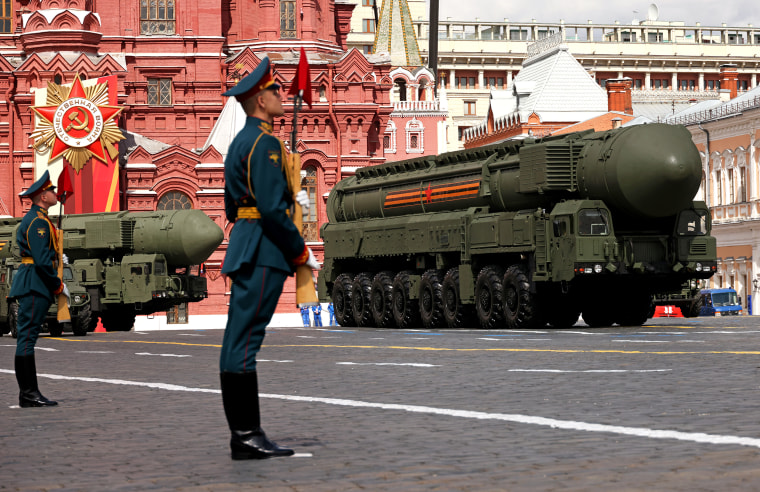
As of Thursday, the last significant nuclear arms control agreement between Russia and the United States, known as the New START treaty, has expired. This marks a new era where the world’s two largest nuclear powers have no imposed limits on their nuclear arsenals.
Previously, the New START treaty restricted each nation to 1,550 deployed nuclear warheads. Now, the absence of this treaty leaves the American and Russian nuclear capabilities unrestrained. Experts and officials express growing concern about the potential for misunderstandings and the possibility of a nuclear arms race reminiscent of the tensions in the 1960s.
“For the first time in more than half a century, we face a world without any binding limits on the strategic nuclear arsenals of Russia and the U.S.,” stated United Nations Secretary-General António Guterres, emphasizing the somber implications for global peace and security.
Currently, the United States and Russia hold nearly 90% of the world’s nuclear arsenals, comprising more than 10,500 warheads, according to the Stockholm International Peace Research Institute’s 2025 report. Meanwhile, China’s nuclear stockpile has reached 600 warheads, expanding by approximately 100 new warheads each year. Together, the nuclear capacities of these three nations could obliterate life on Earth multiple times over.
The demise of the treaty signifies the end of a process that began in the 1960s, aiming to limit and reduce nuclear arsenals through collaborative efforts between the U.S. and Russia, formerly the Soviet Union. Mike Albertson, involved in the negotiations of the New START treaty and currently serving as the deputy director at the Center for Global Security Research, reiterated the historical significance of these disarmament efforts.
Russia suspended its treaty obligation in early 2023 due to U.S. support for Ukraine. Despite this, Russian President Vladimir Putin offered to voluntarily comply with the treaty’s terms for an additional year. However, as per October remarks from former President Donald Trump, there has been no official response from Washington regarding this offer.
For former Soviet and Russian negotiator Nikolai Sokov, the expiration represents a personal setback after spending nearly 45 years working on nuclear arms control. The lapse evokes paranoia reminiscent of early Cold War times when conflict and uncertainty were prevalent.
During the Cold War era, particularly after the Cuban Missile Crisis, a sense of urgency about nuclear arms control emerged. This sense has diminished over the years, leading to less emphasis on regulation, making the expiration of the New START a significant loss in terms of predictability and communication between nuclear powers.
Before its suspension in 2023, on-site inspections and extensive auxiliary discussions facilitated transparency and trust. Fabian Rene Hoffmann, a research fellow at the Oslo Nuclear Project, warns that despite the availability of satellite imagery and other intelligence methods, the lack of transparency emphasizes the current low-trust environment.
Despite the treaty’s expiration, Russia claims it remains open to dialogue, although it perceives the U.S.’ response as inadequate. China’s nuclear expansion is expected to continue, with projections indicating over 1,000 warheads by 2030.
The demise of the New START raises concerns about a potential arms race, though it’s unlikely to commence immediately. Instead, intensified unease comes from the risk of more advanced and sophisticated weaponry developments.
Sokov cautions against panic, urging timely dialogue to reinstate nuclear arms regulation.
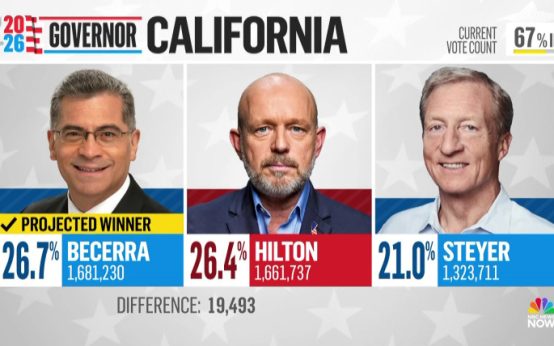 Investigations Launched Amid California Election Fraud Claims
  Khanna Urges Apology from Maine Senate Candidate Over Misconduct Allegations
 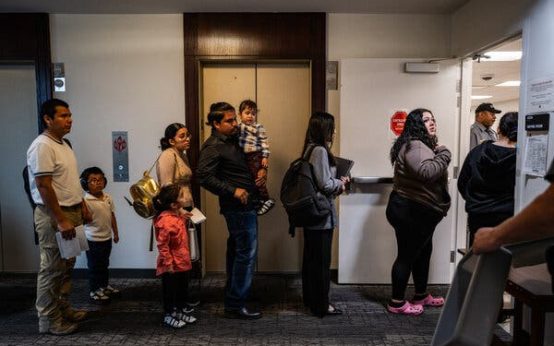 Judge Overturns Trump-Era Immigration Policies
  Trump Aims to Reduce National Intelligence Office Size
  California Primary Election 2026: Key Races and Emerging Results
  Xavier Becerra Advances in California Governor Race