Oil Prices Remain Volatile Amidst Middle East Tensions
Oil prices experienced fluctuations on Monday after a dramatic overnight rise. Brent crude, the international benchmark, fell by 7 cents to approximately $108 per barrel after briefly surpassing $110. It had been around $70 a barrel in late February, prior to the outbreak of the Iran war. Benchmark U.S. crude experienced a decrease of 33 cents, trading at about $102 per barrel.
Despite the tensions, the S&P 500 saw a slight increase of 0.1% after European stocks recovered from losses, though most Asian markets finished on a lower note. The Dow Jones edged up by 33 points, and the Nasdaq gained 0.2%.
Iran’s Hard Stance Amid International Pressure
Iran’s President Masoud Pezeshkian acknowledged on Monday the challenges faced by the country due to the ongoing conflict with the U.S. and Israel. He emphasized Iran’s capability to defend its rights. Pezeshkian urged leaders to speak honestly about the realities, discouraging misleading information.
He reinforced Iran’s commitment to diplomacy but stressed the nation’s resilience against pressure. Iran will not compromise its dignity for convenience, he stated.
International Incidents Escalate Tensions
The sister of Ireland’s president was reportedly detained by Israeli forces at sea, according to the Irish Independent. Dr. Margaret Connolly was part of a flotilla aiming to breach Israel’s blockade of Gaza. This incident has drawn criticism from activists who label Israel’s actions as illegal.
COGAT, the Israeli agency handling Palestinian affairs, rejected the humanitarian claims of the flotillas, stating that they are provocations. Meanwhile, the flotilla organizers accuse Israel of disregarding international maritime law.
Hezbollah and Israel Ceasefire Strains
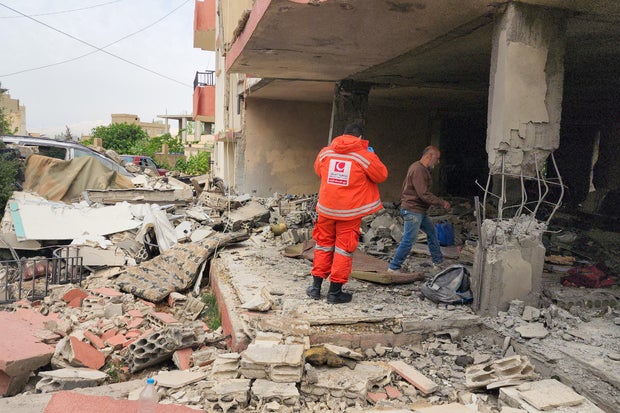
Israel’s Defense Forces advised Lebanese residents to evacuate, citing Hezbollah’s breach of a U.S.-mediated ceasefire. Despite an extension of the ceasefire, Hezbollah abstained from peace talks and continues to reject the ceasefire agreement.
Lebanese President Joseph Aoun expressed that a broader peace deal hinges on Israel withdrawing and other conditions being met. In response, Israel has maintained occupation in parts of southern Lebanon, citing Hezbollah-related security concerns.
Strait of Hormuz: A Geopolitical Flashpoint
Iran and Oman are negotiating to ensure safe transit through the Strait of Hormuz. Iran announced a new authority to oversee shipping and collect passage fees. President Trump’s remarks highlighted U.S. control over the strategic shipping lane, despite Iran’s actions suggesting otherwise.
This geopolitical tension has caused gridlocks in critical shipping routes, adding to global economic uncertainties.
German Condemnation of Iran’s Actions
Germany’s Chancellor Friedrich Merz condemned Iran for renewed airstrikes on UAE, particularly targeting nuclear facilities. Merz urged Iran to engage in serious negotiations to prevent further regional destabilization.
Diplomatic Efforts and Market Reactions
Iran insists on pursuing peace with the U.S., despite receiving mixed signals from President Trump. The regime stresses the importance of diplomacy while preparing for potential conflicts.
Global markets responded to rising tensions with oil prices increasing and equities experiencing a mixed performance. Economic strategies suggest heightened risks of re-escalation are possible in the absence of diplomatic breakthroughs.
 Investigation into Bus Company’s Network and Safety Violations
  Latin American Deportees in Congo: Return to Home Countries Amid Challenges
  Controversy Surrounds Stabbing Incident of British Student
  Royal Cottages and Controversies: Financial and Legal Revelations
  Oak Lawn Librarian Supports Library Projects in Zimbabwe
  Inflation’s Rise Challenges Economists’ Claims