
Authorities are working to resolve a critical situation following the overheating of a chemical tank at a Southern California aerospace facility. The tank, holding around 6,000 to 7,000 gallons (22,713 to 26,498 liters) of methyl methacrylate, required an urgent evacuation order. Tens of thousands of residents in Garden Grove, Orange County, were affected last week when the tank began to vent hazardous vapors into the air.
The Risk Posed by Methyl Methacrylate
Methyl methacrylate is a flammable and colorless liquid used in manufacturing resins and plastics. The Environmental Protection Agency regulates this substance due to its potential health risks. It can irritate the lungs, eyes, and skin, and in substantial doses may reduce lung function and cause dizziness and memory problems. Prolonged exposure may lead to severe respiratory issues or unconsciousness. However, officials have assured that air pollution in the evacuation zone remains within normal limits.
Issues with the Storage Tank
The tank at GKN Aerospace faces problems with drainage valves not functioning correctly, posing a risk of a large spill or explosion. Authorities have been cooling the tank with water, aiming to keep temperatures below 85 degrees Fahrenheit (29.4 degrees Celsius) to relieve pressure. Lee Zeldin, head of the EPA, mentioned that a controlled low-volume release is likely, allowing for monitoring and containment of the threat.
Potential Explosion Threat
If the temperature inside the tank rises further, pressure build-up might convert the methyl methacrylate from liquid to gas, increasing the explosion risk. This could set off other nearby tanks and widen the affected area. Dr. Regina Chinsio-Kwong, Orange County’s chief health officer, warned that vapors produced by such a blast would be hazardous to inhale.
Currently, evacuation orders remain in place, and aerial photographs show emptiness on the streets of the area. Several evacuation shelters have opened, although Disneyland’s nearby theme parks have not been evacuated. Residents outside the evacuation zone do not face immediate health risks, said Chinsio-Kwong.
Steps Taken to Mitigate Risks
Authorities report that a crack in the tank might reduce the explosion risk. Wayhowe Huang of the Orange County Fire Authority observed no active leakage from the tank. A team was set to conduct an all-night operation to assess whether pressure had reduced, hoping to prevent the worst-case scenario. Interim fire chief TJ McGovern and the EPA plan for possible low-volume releases to alleviate pressure. GKN Aerospace continues collaborating with local authorities to address the situation.
 Limited Interest in Arctic National Wildlife Refuge Oil Auction
  Confronting the Truth Behind Sustainability Buzzwords in the Food Industry
  The Aftermath of Santa Rosa Island’s Fire
  Largest Seizure of Illegal Cockroaches in Australia
  Flesh-Eating Fly Returns to the United States Causing Concern
 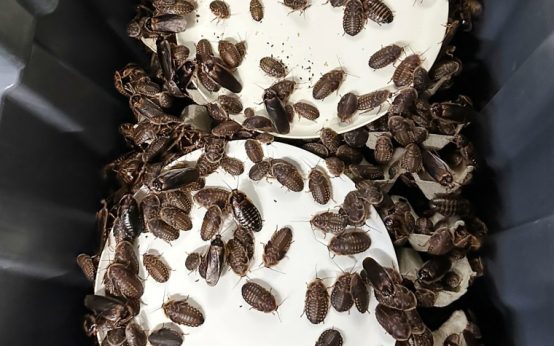 Australia’s Largest Seizure of Exotic Invertebrates: Over 100,000 Cockroaches Confiscated