
A recent study in the journal Science reveals that socioeconomic factors significantly impact brain development in preteens. The research involved analyzing data from over 2,300 children aged 9 and 10, finding clear brain differences associated with environmental factors visible in MRI scans.
The study highlights that children from lower-income neighborhoods with limited social support show brain patterns linked to less sleep and heightened stress. Scott Marek, the study’s lead author and an assistant professor of radiology at WashU School of Medicine, indicates the need to understand the biological embedding of socioeconomic influences.
“Something is going on in these neighborhoods,” Marek observed. “We need to find out how socioeconomics is becoming biologically embedded.”
Stanford University’s Russell Poldrack, not involved in the study, noted the research underscores the impact of one’s environment on the brain. The study challenges previous research focusing on links between brain development, IQ, and mental health, which may require re-evaluation in light of these findings.
Dr. Nico Dosenbach from WashU Medicine points out that socioeconomics was the most significant variable, overshadowing other factors. Previous studies might need re-examination for not including socioeconomic data, potentially altering conclusions about cognitive performance’s effect on brain differences.
Dr. Theodore D. Satterthwaite of the University of Pennsylvania supports this, emphasizing the rising body of research indicating childhood environment’s crucial role in brain development. The federally funded Adolescent Brain Cognitive Development (ABCD) Study provided the data for this research, which tracks thousands of children starting at ages 9 and 10.
Researchers used ABCD brain scans to explore the organ’s structure and communication networks, identifying associations with a child’s environment, cognitive abilities, and mental health. Socioeconomic-related factors predominated, particularly affecting areas involved in sensory processing and motor control.
The study found that socioeconomic conditions might influence circuits related to alertness, which can change with reduced sleep, increased stress, or excessive social media use. These conditions are prevalent in neighborhoods with fewer economic, educational, and social opportunities.
“The data are screaming that we should be looking at sleep, stress and screens if we want to get somewhere,” Marek explained.
While these findings do not irrefutably prove causation, they urge further investigation into how sleep, stress, and screen time contribute to brain differences.
 Veteran News Anchor Bill Ritter Diagnosed with Alzheimer’s Disease
  Hantavirus Outbreak on Cruise Ship Raises Concerns: A Closer Look
 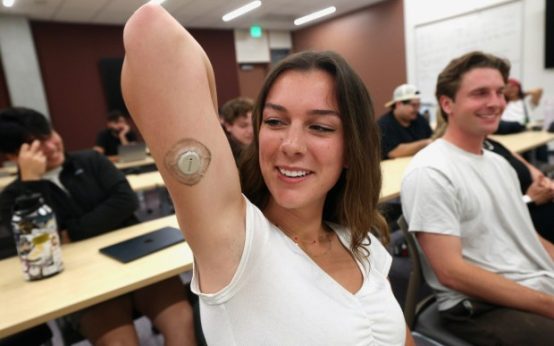 Students Use Glucose Monitors to Understand Their Health
  Efforts to Develop Treatments for Bundibugyo Virus
  Ebola Outbreak in DRC: Challenges in Testing and Response
  A Surrogate’s Journey: Balancing Life, Care, and Selflessness