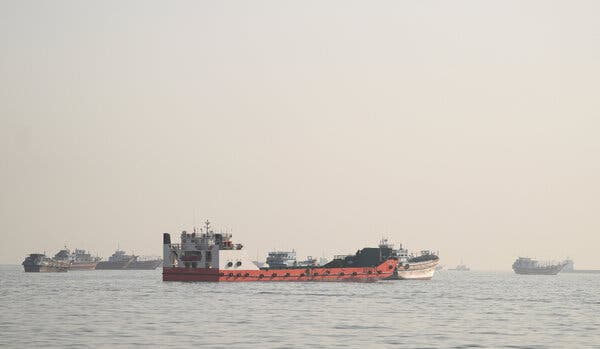
The Strait of Hormuz, a key waterway for global energy supplies, has become the center of a new controversy regarding shipping fees. Although President Trump announced the reopening of the strait as ‘permanently toll-free,’ Iran stated its intentions to charge fees for unspecified services.
International law prohibits toll charges for passage; however, some fees are permissible for services rendered. Iran did not charge fees in the strait before the U.S.-Israeli conflict, adding unexpected expenses and potential complexities for commercial shipping.
On Monday, Esmaeil Baghaei, Iran’s foreign ministry spokesman, clarified that Iran is not aiming to impose transit tolls. Instead, fees will be charged for services offered. The nature of these services remains unclear, though environmental charges have been suggested by Iranian officials.
“We are not seeking to levy transit tolls; however, fees will be charged in exchange for the services that are provided,” Baghaei stated.
Maritime law experts note that while fees for actual services, like waste management at ports, can be legal, tolls for strait passage are not. Labeling a toll as a fee does not make the charge legal. Previously, the idea of vessels paying for passage emerged following retaliatory Iranian strikes on commercial ships in response to U.S. and Israeli actions in February.
By March, Iran announced plans to levy fees for strait navigation, leading to the establishment of the Persian Gulf Strait Authority by May. This authority’s role involves managing ‘safe passage permits.’ Iran and Oman have also explored a fee-based ship payment system for services rendered.
 Inside the Iran Peace Deal: Negotiations and Challenges
  Three Men Charged in Fatal Rope-Jumping Incident in Brazil
  Netanyahu Defies Ceasefire Agreement Amid Ongoing Conflict
  Lawmakers Seek Clarity on U.S.-Iran Deal
  World Cup in Seattle Overshadowed by Controversial ‘Protest Zones’
  U.S. Administration Acknowledges Agreement in Iran Conflict