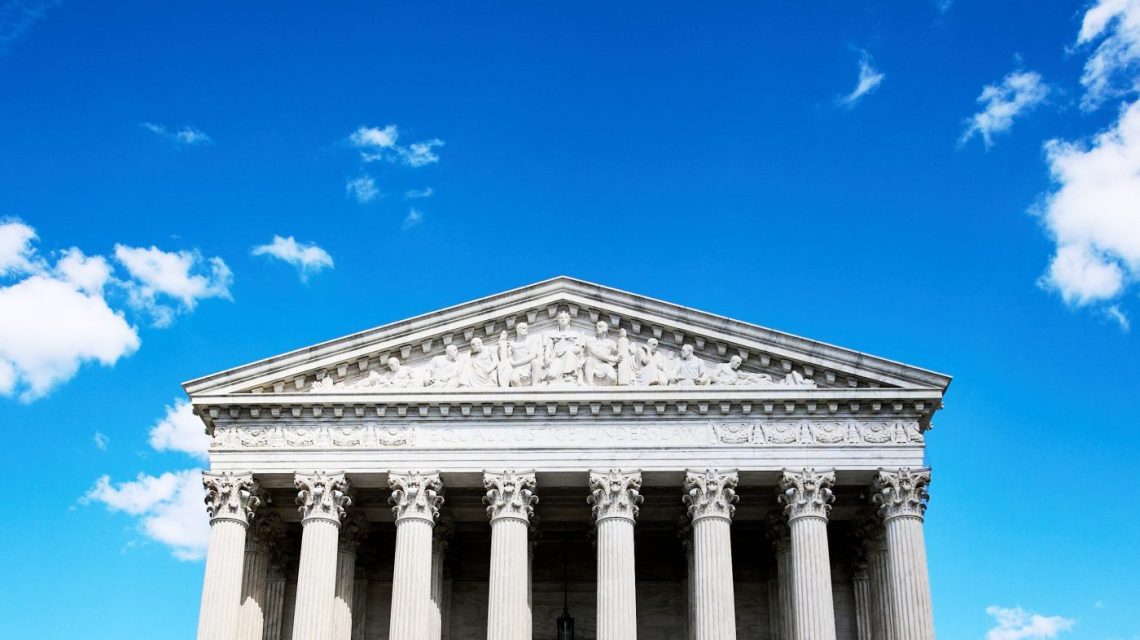
The Supreme Court in Washington was observed on April 30, 2026. For some families, praying before a meal is a cherished tradition. Yet, asking for government permission to pray is an unfamiliar concept to many, including Daniel Grand, an Orthodox Jew from University Heights, Ohio.
A few years ago, Grand invited about 12 friends to his home for prayer, as his faith requires a quorum known as a “minyan,” consisting of at least 10 Jewish men for prayers held thrice daily. On the Sabbath and Jewish holy days, orthodox Jews refrain from driving or extensive travel, making local prayer gatherings essential.
Grand’s intentions were shared with city authorities, leading to a directive for him to cease religious gatherings at home. He was instructed to apply for a special-use permit, necessary for religious assemblies in residential areas. Grand did not plan to establish a temple, merely to pray, yet he complied and submitted the permit application.
The process faced obstacles. Residents sent protest letters expressing concern about neighborhood labels. During a zoning commission hearing, Grand faced jeers and non-cooperation, prompting him to abandon his application. This did not mark the end. The city urged residents to report his visitors, police surveilled his home, and Grand faced unjust housing code violations claims. He experienced losses from withheld certificates and tax benefits, as well as spotty sanitation services.
A significant catch emerged; even with approval, the permit necessitated converting his home into a synagogue, incompatible with residential living due to zoning laws. Grand confronted a legal conundrum threatening his fundamental rights. Seeing the First Amendment implications, Grand sought federal court intervention. However, courts stated that he must first complete the city’s permit application—a situation likened to prioritizing bureaucracy over immediate relief.
Grand’s legal fight highlights a prominent “circuit split” in American law. While the 1st and 11th Circuit Courts allow immediate federal court access when constitutional rights are breached, the 3rd, 9th, and 6th Circuits require completion of local permit processes initially. If Grand resided in Boston or Atlanta, a federal decision might already exist. However, in cities like Philadelphia, Seattle, and Cleveland, court access remains barred.
This situation illustrates systematic religious discrimination using zoning laws, treating faith as a manageably problematic issue, rather than a protected freedom. Five circuit courts have addressed similar cases, confirming the extensive nature of this issue. Grand’s situation, involving routine gatherings unlike poker or book clubs which face no permit obstacles, emphasizes the need for change.
The inconsistencies in circuit court rulings necessitate Supreme Court evaluation. Without such review, constitutional violations, akin to Grand’s ordeal, may persist unchecked. A resolution from the justices is crucial to ensure protection for religious practices nationwide.
John Bursch, serving as senior counsel and VP of appellate advocacy at Alliance Defending Freedom, underscores this call for justice.
Copyright 2026 Nexstar Media Inc. All rights reserved.
 Luigi Mangione to Use Psychiatric Defense in Murder Trial
  Afghan National Pleads Not Guilty in DC Shooting Case
  Federal Murder Charges Raise Death Penalty Possibility
  Florida Judge Orders Teen Held in Stepmurder Case
  Supreme Court to Decide on Six-Person Juries in Criminal Cases
  Andrew Boutros’ Tenure as U.S. Attorney for Northern District of Illinois