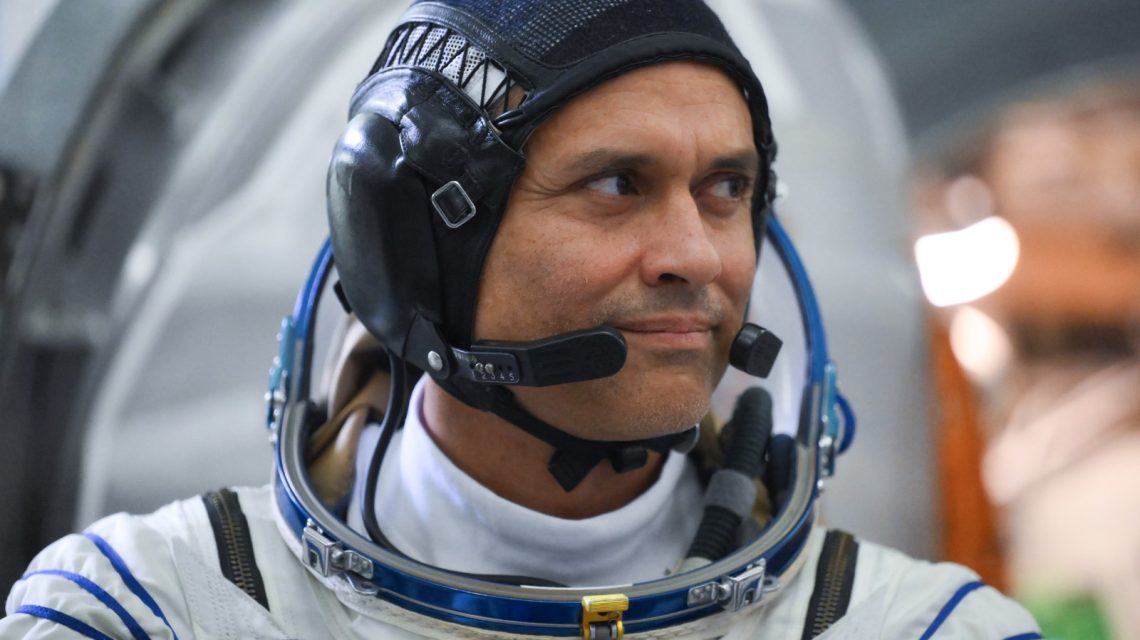
Astronaut’s Plans for Extraterrestrial Life Search on ISS
A NASA astronaut is gearing up for an eight-month mission in orbit with plans to test for extraterrestrial life on the International Space Station (ISS). Dr. Anil Menon, an emergency medicine physician and U.S. Space Force colonel, is set to launch aboard the Soyuz MS-29 mission next month. His main goal centers on studying the physiological effects of prolonged spaceflight, but he also aims to search for microbiological life during spacewalks.
Objectives of the Extraterrestrial Life Experiment
Menon seeks to determine if bacteria can survive on the station’s exterior by exposing them to open space’s harsh environment, including cosmic radiation and temperature extremes. Previous reports suggested potential contamination, but Menon plans a controlled experiment for clearer results. Findings will be shared publicly, aligning with the U.S. government’s recent declassification of UFO sightings.
Focus on Human Physiology in Space
Menon’s primary research revolves around studying space travel and low gravity’s impact on the human body. This research will inform future missions to Mars. He highlights the risk of bone mass loss in space and how specific exercises can prevent this. Menon is excited to experience space’s unique effects on himself and emphasizes human resilience in the face of challenges like Mars’ toxic chemicals.
Mission Logistics and Personal Challenges
The Soyuz MS-29 mission will launch from Baikonur Cosmodrome, Kazakhstan, on July 14. Menon, along with Russian cosmonauts Pyotr Dubrov and Anna Kikina, will spend eight months in orbit conducting scientific research and technology demonstrations, including health in space studies. Menon personally anticipates missing his family but benefits from video calls for contact.
Menon’s Background and Career
Menon is a well-rounded figure with expertise in medicine, engineering, and spaceflight. Born to immigrant parents in Minneapolis, he earned degrees in neurobiology, medicine, and mechanical engineering. Prior roles include NASA flight surgeon and SpaceX’s first flight surgeon. He’s participated in humanitarian missions and serves as a colonel in the U.S. Space Force.
Preparing for the Soyuz MS-29 Mission
Menon’s upcoming spaceflight marks his active transition from support roles to direct involvement in scientific missions. His work includes experiments on blood health in microgravity and methods to produce intravenous fluids from onboard water resources.
Importance of the ISS for Future Exploration
The mission underscores the ISS’s role in preparing for future moon and Mars missions by studying microgravity’s effects and overcoming challenges like perchlorates in Martian soil.
Considerations for Mars Travel
Menon acknowledges the technological hurdles for Mars transportation. He points out the need for proving existing technologies and solving challenges akin to energy utilization. SpaceX’s capabilities are noted, with confidence expressed in the progress of solutions.
Impact of UFO Sightings Declassification
The mission comes during a wave of public interest fueled by the U.S. government’s declassification of UFO sightings, now termed Unidentified Anomalous Phenomena (UAP). Record releases include military reports, videos, and sensor footage, part of a transparency initiative. The Pentagon and NASA maintain that these materials don’t confirm alien spacecraft, with many sightings remaining unexplained due to limited data.
 Rubin Observatory’s Mission to Find Planet 9
  The High Stakes of Investing in SpaceX
 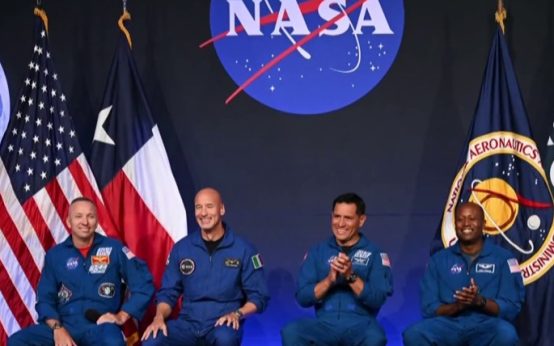 NASA Faces Criticism Over All-Male Artemis III Crew Selection
  NASA Reveals Crew for Artemis III Mission
 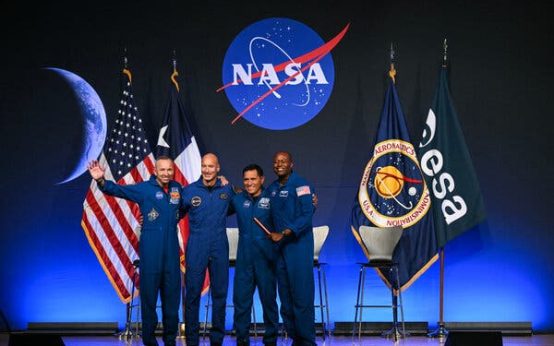 NASA’s Artemis III Crew Announced: All-Male Team for Moon Mission
  Prada Unveils New Astronaut Garment for Artemis Mission