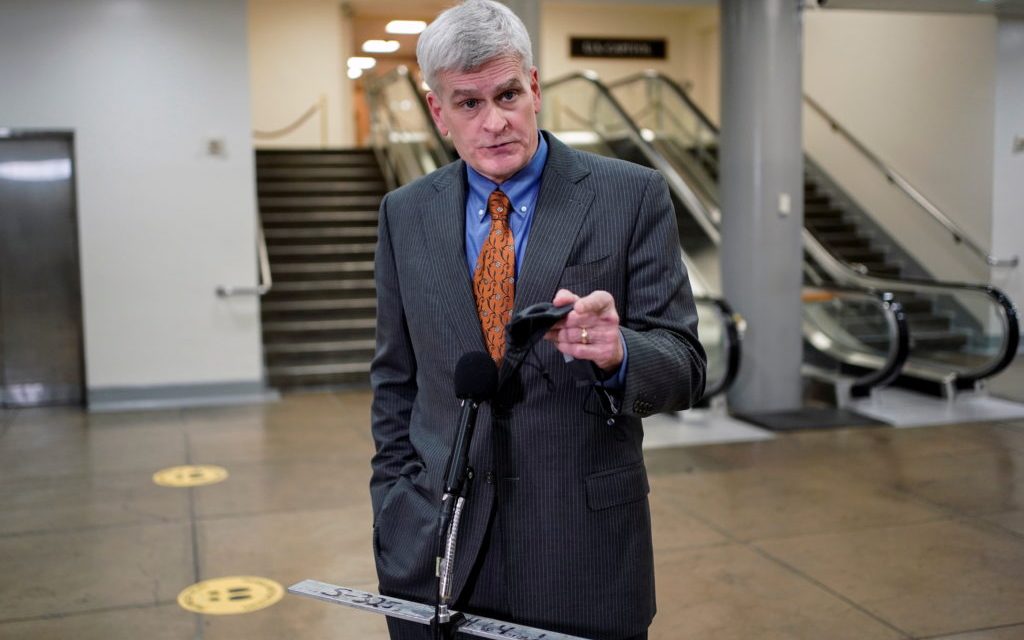
Senator Bill Cassidy faced a decisive defeat in the Louisiana Republican primary. This loss occurred five years after he voted to convict President Donald Trump during the impeachment trial concerning the Capitol attack on January 6.
Cassidy lagged behind U.S. Representative Julia Letlow and state treasurer John Fleming. Both Letlow and Fleming benefited from Trump’s endorsement. They will compete in a runoff scheduled for June 27.
This result highlights Trump’s strong influence over the Republican Party despite challenges such as inflation, declining approval ratings, and dissatisfaction over the war with Iran.
“Our country is not about one individual,” Cassidy told supporters, emphasizing the importance of all Americans and the Constitution.
Letlow acknowledged Trump’s crucial support at her victory party, praising him as “the best president this country has ever had.” She criticized Cassidy for betraying Louisiana voters during Trump’s impeachment trial.
Trump celebrated this result online, criticizing Cassidy and accusing him of being disloyal. Cassidy responded indirectly, stating that online insults from those lacking integrity do not affect him.
Intraparty Turmoil
Trump’s influence extends beyond Louisiana. He aims to replace politicians who have opposed him, exemplified by his support in Indiana primaries against state senators rejecting his redistricting plan.
U.S. Representative Thomas Massie faces a Trump-endorsed challenger due to past disagreements with Trump on tax legislation, Epstein files release, and the war with Iran.
Republicans confront significant internal conflict amid concerns about Congress control in upcoming midterm elections.
Runoff Implications
The runoff between Letlow and Fleming will likely decide Louisiana’s next senator, given the state’s GOP leanings. Meanwhile, Democrat Jamie Davis progresses to a runoff, with competition still tight between Nicholas Albares and Gary Crockett.
Election Confusion
Recent Supreme Court decisions altered the Voting Rights Act, complicating the congressional map drawing and resulting in House primary delays. This change caused confusion for voters, exacerbated by shifting to a new partisan ballot system.
Cassidy remarked, “The process that was set up was destined to be confusing,” suggesting voter troubles affected his campaign.
Campaign Financials
Cassidy invested significantly in his campaign, spending $9.6 million on ads. Letlow’s campaign spent around $3.9 million, with Fleming spending $1.5 million. Advertisements criticized Letlow’s support for diversity and inclusion initiatives.
Targeted by Trump
Cassidy’s impeachment conviction vote dogged him throughout his campaign. Voters like John Martin expressed dissatisfaction over Cassidy’s decision, preferring Letlow due to Trump’s endorsement.
Cassidy’s clashes with Trump included supporting Robert F. Kennedy Jr. for HHS Secretary, leading to tension over vaccine views and failed nominations for roles like surgeon general.
Letlow Awaits Trump’s Endorsement
Julia Letlow’s political career began with personal tragedy. Her husband Luke was elected to the U.S. House but succumbed to COVID-19 before swearing in. She succeeded him in a special election and gained reelection thereafter.
Letlow entered the Senate race after Trump endorsed her in January, overshadowing Fleming’s early candidacy and support for Trump.
Support journalism for a robust democracy. Engage in civil dialogue and uphold a free press.
 U.S. Military Awaits Pentagon’s Clarification on Troop Levels in Europe
  Xavier Becerra Advances in California Governor Race
  Graham Platner’s Campaign Amid Controversy
  South Carolina GOP Primary Heats Up as Trump Endorses Evette
  Federal Judge Overturns Trump-Era Immigration Policy
  Controversies Challenge Graham Platner’s Senate Campaign in Maine