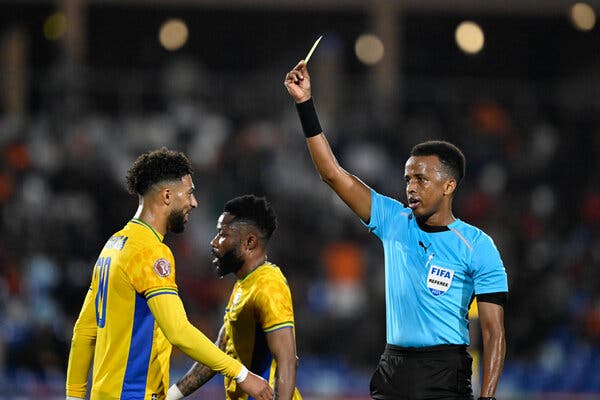
Omar Artan, a Somali referee selected for the World Cup, was denied entry into the United States upon his arrival in Miami. Despite this setback, he is scheduled to officiate a significant club match in Europe later this year.
Artan was part of the 52 officials chosen by FIFA, the international governing body for soccer, to referee in their tournaments. After being turned away by U.S. immigration authorities in Miami, World Cup organizers faced criticism on a global scale. FIFA responded by downplaying the backlash.
The Union of European Football Associations (UEFA) announced that Artan will preside over a game on September 12 between Paris St.-Germain and Aston Villa, highlighting a contrast in how he is perceived by European and American officials.
Upon his arrival at Miami International Airport, U.S. Customs and Border Protection officials questioned Artan and then arranged his return to Istanbul, his point of departure. He subsequently returned to Mogadishu, Somalia, early Wednesday. U.S. border authorities cited ‘vetting concerns’ for their decision, without offering further details.
Artan’s name closely resembles that of an individual associated with the Somali militant group Al Shabab, according to a search on the U.S. Office of Foreign Assets Control sanctions list.
In a recent interview, Artan stated that he is unfamiliar with the militant group. He was one of seven African referees selected by FIFA for the tournament. Last year, the Confederation of African Football named him Africa’s top referee, and he would have been the first Somali to officiate a World Cup match.
Though Artan will not be officiating at the World Cup, his return to Mogadishu was met with celebrations. Locals expressed pride and admiration for him as a national and continental hero.
Sacdiya Olad, a 23-year-old resident, expressed her joy, saying, ‘I feel really happy he is finally back to where he is loved the most. He is a national hero for us and for Africa as well because he is the best referee in Africa.’
Contributions to this report came from Matthew Mpoke Bigg in Nairobi, Kenya, and Hussein Mohamed in Mogadishu, Somalia. The article was reported by Tariq Panja, a global sports correspondent.
 MLB’s Pride Night Efforts Face Challenges and Criticism
 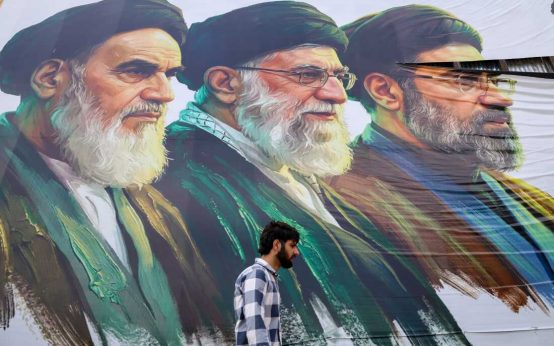 Economic and Political Impact of the Iran Conflict
 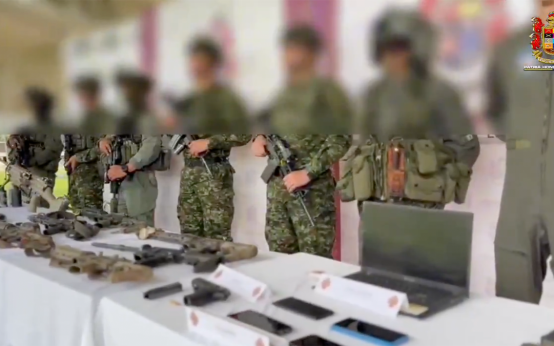 Colombian Military Neutralizes Militant Group Members After Bus Bombing
  USMNT’s Winning Style in World Cup Opener Shows Pochettino’s Impact
  England and Croatia Battle in Exciting 2026 World Cup Match
  Hillary Clinton Acknowledges Trump’s Gaza Peace Plan