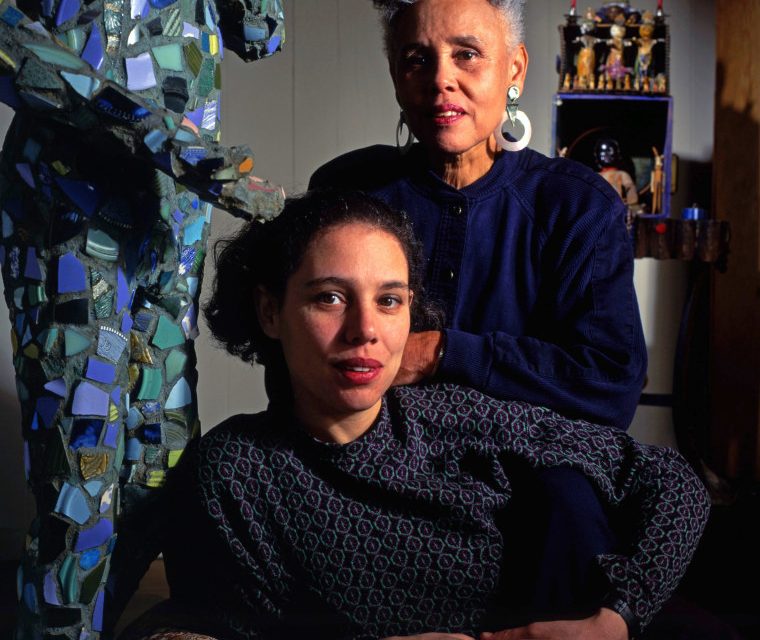
Betye Saar, an influential artist whose work deeply resonated with Black identity, culture, and spirituality, passed away on Sunday morning in Los Angeles. She was 99. Relatives confirmed her death on Monday, noting she would have reached her centennial this week.
Saar held a pivotal role in the 1960s Black Art Movement. She was renowned for her innovative assemblage boxes, sculptures crafted from found objects, and her use of Jim Crow-era memorabilia. Her creations became potent symbols of Black liberation.
A statement from Roberts Projects, her representing gallery in Los Angeles, emphasized the significance of her artwork: “Her symbolically rich body of work has evolved over time to demonstrate the environmental, cultural, political, racial, technological, economic, and historical context in which it exists.”
Initially embarking on a design career, Saar transitioned to the art world at 35, continuing to create into her 90s. Growing up in Pasadena, she became part of a collective of Black artists in nearby Altadena. Simon Rodia’s Watts Towers often served as a source of inspiration.
Saar’s artistic approach included painting, printmaking, sculpture, and the use of found objects like dolls and washboards. Her works frequently featured recurring themes such as boats, clocks, altars, and symbols of cosmology. Notably, she integrated her astrological sign, Leo, through lion imagery in various pieces.

The gallery expressed the transformative nature of Saar’s art: “Her appropriation of Black collectibles, heirlooms, and utilitarian objects are transformed through subversion.” Among Black American artists of previous generations, Saar holds unmatched respect.
In 1969, Saar created “Black Girl’s Window.” Though groundbreaking, recognition came later, and the Museum of Modern Art in New York acquired it in 2019. In her reflections, Saar noted the limited gallery presence for Black artists in Los Angeles in the past.
“The Liberation of Aunt Jemima,” crafted in 1972, stands among her most significant works. Utilizing collected memorabilia depicting derogatory imagery of Black individuals, Saar reimagined the “mammy” figure with revolutionary symbolism. She equipped the character with a rifle and grenade, turning derogatory stereotypes into rebellious icons.
Saar’s approach emerged following the assassination of Rev. Martin Luther King Jr. in 1968—an event she described as a catalyst for transformation from mysticism to activism. The Aunt Jemima symbol transformed into a call for revolution.
In 2020, Quaker Oat announced retiring the Aunt Jemima brand, acknowledging the racial stereotype in its origins.
Saar’s influence extended beyond her art. She mentored numerous Black artists, including Kerry James Marshall. Although a 1975 solo exhibition at the Whitney Museum of American Art celebrated her work, major institutions sporadically showcased her art thereafter. However, major 2019 exhibitions at the Los Angeles County Museum of Art and MoMA acknowledged her enduring impact.
Induction into the American Academy of Arts and Letters in spring 2026 marked another pinnacle in her career.

Angela Robinson Witherspoon, who produced and directed the 2023 documentary “Betye Saar: Ready to Be A Warrior,” recalled Saar’s vigor and drive to address the art world’s prevailing dynamics dominated by white males.
“She was raising her three young daughters and wanted to be part of the Civil Rights Movement,” Robinson Witherspoon said.
Saar’s fashion-focused exhibition “Let’s Get It On: The Wearable Art of Betye Saar” is currently on display at Roberts Projects in Los Angeles, alongside over 100 of her dolls showcased at the New-York Historical Society in Manhattan.
 Brian Urlacher Praises WNBA Star Sophie Cunningham for Her Bold Stance
  Overview of the 2026 Booker Prize Longlist
  New Bedford Whaling Museum’s ‘Worst Aquarium’ Design Goes Viral
 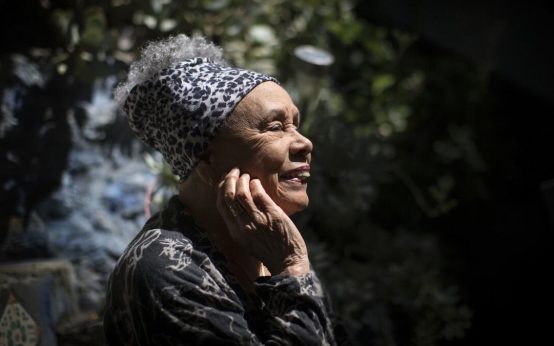 Betye Saar: Celebrating a Trailblazing Artist’s Legacy
  Sophie Cunningham Reaffirms Her Support for Girls’ Sports
  Cool Machine: The Last Chapter in Colson Whitehead’s Harlem Crime Novels