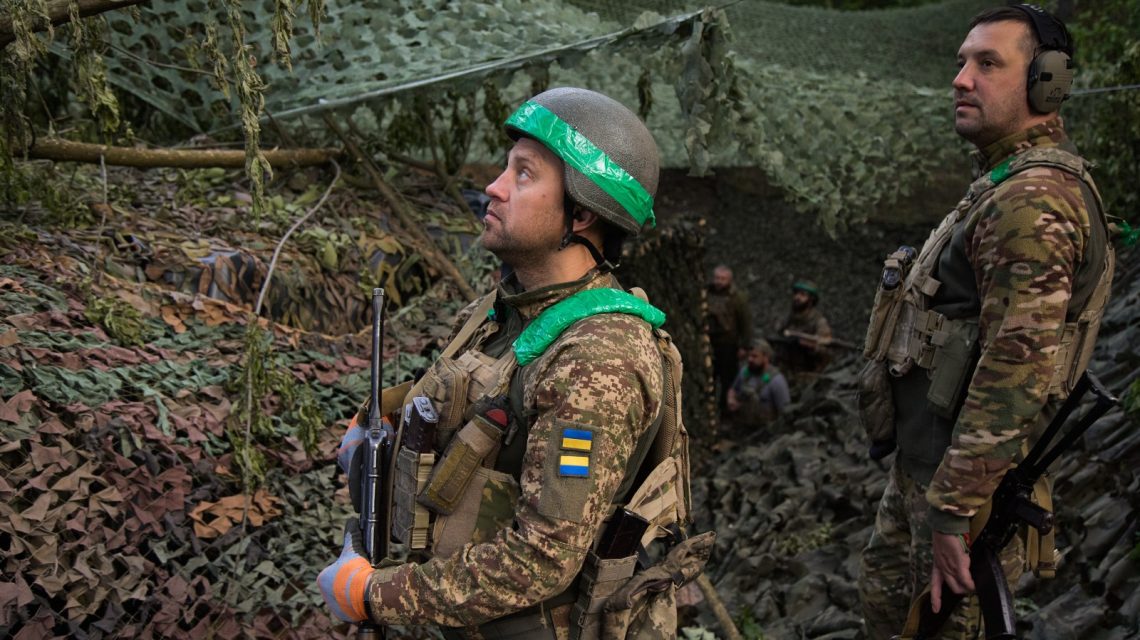
Ukrainian President Volodymyr Zelensky recently shared a positive outlook, declaring that Ukrainian forces are holding more positions and inflicting increased damage on Russian troops. This signifies a shift in Ukraine’s military fortunes, previously weighed down by concerns over dwindling U.S. support that seemed to favor Russia. Zelensky’s optimism on May 19 marks a notable change from earlier in the year when peace talks led by the United States stalled, and the Trump administration reduced aid. A harsh winter of Russian strikes on Ukraine’s infrastructure added to the pressure. Despite this, Ukraine’s effective use of unmanned aerial vehicles (UAVs) has provided a counterbalance to declining American support.
The success of drone strikes, reaching beyond the front lines and deep into Russian territory, has fueled hope for Ukraine. Military analyst Giorgi Revishvili highlighted that the general dynamics of the war are gradually shifting in favor of Ukraine. He told Newsweek, “The situation for Ukraine is markedly better than it was last year.”
Ukraine Increases Drone Production and Strikes
Ukraine’s defense ministry has reported a substantial increase in the production of various types of drones over the past year. These include reconnaissance, mid-strike, and deep-strike drone systems. Additionally, fiber-optic first-person view (FPV) drones have proven effective along the frontline. Matthew Arnold, director of the Democratic Resilience in a New Age of War program at LSE Ideas, commended Ukraine’s initiative in drone technology. He remarked that Ukraine had shown confidence by maintaining momentum even amidst reduced U.S. aid. “It is learning, adapting, and deploying drones quicker and more successfully than Russia can,” Arnold told Newsweek.
Revishvili noted that Ukraine has intensified its mid-range strike campaign against Russian logistics, targeting areas 18 to 65 miles within occupied territories. This strategy disrupts logistics and the Russian economy, increasing pressure on Russian military operations. While Kyiv previously attempted to thwart Moscow’s objective to establish a land corridor from Crimea to Rostov, recent daily attacks on Russian supply lines indicate a renewed focus.
The Critical Next Six Months
General Andriy Biletskyi of Ukraine’s 3rd Army Corps underlined the importance of sustaining momentum. He told Reuters that continued gains on the frontline could compel Russia to relinquish the unoccupied parts of the Donetsk region. Russia’s demands in peace talks backed by the U.S. include annexation of the entire oblast claimed in the eastern Donbas region. Kyiv rejects these demands.
Biletskyi highlighted Russia’s military exhaustion and the inability to achieve significant breakthroughs, exacerbated by Elon Musk’s decision to halt Starlink internet access for Russian forces. His troops maintain control around Sloviansk, forcing Moscow to engage directly, thereby incurring heavy losses. Biletskyi stated that the next six months would be critical in defining strategic points and gaining leverage over Russia in negotiations.
Revishvili added that if Ukraine sustains and expands its campaign, Russian forces could face significant challenges. By controlling operational depths and steadily reducing logistics, Ukraine could hinder Russian advancements. This tactic might also create exploitable gaps along the frontline.
Tangible Gains for Ukraine
Zelensky reported that Ukraine had reclaimed approximately 230 square miles of territory in 2023. By contrast, Russian advancements were limited to 40 square miles, significantly down from 625 square miles the previous year, as noted by the Institute for the Study of War. The think tank pointed out Kyiv’s advantage in drone warfare and suggested imminent tactical mechanized assaults.
Ukraine’s regained drone superiority, along with its efforts to reverse Russian gains, may mark the onset of a new war phase, according to ISW.
Strikes Within Russia
Zelensky confirmed that Ukrainian strikes against Russian air defense and logistics, reaching up to 120 miles behind the front line, have quadrupled since February. These strikes hinder Russian advances and disrupt the flow of troops and materials to the front. Targets have included facilities far from the frontline, such as export terminals and refineries.
Recent strikes include the targeting of an oil facility in Volgograd and a refinery in the Krasnodar region. A Ukrainian drone offensive in Moscow on May 18 targeted vital infrastructure, including Sheremetyevo Airport and military electronic firms.
Arnold commented on Ukraine’s deliberate strategy to undermine Putin’s belief that the war would not significantly impact Russia’s economy or populace.
Putin’s Persisting Demands
Despite setbacks on the battlefield, Russian President Vladimir Putin maintains ambitions to capture all of Donetsk and Luhansk oblasts by autumn, as reported by the Financial Times. Sources suggest that Putin, detached from frontline realities, may have an exaggerated perspective of military progress.
Revishvili identified difficulties for Ukraine around Kostiantynivka, a crucial city in defending Donetsk Oblast. Russian forces employ infiltration tactics amid heavy bombardment, endangering Ukraine’s ability to maintain defense. “The battle for Donetsk carries significant political weight,” Revishvili noted, emphasizing the need for Russia to encounter setbacks beyond military defeats.
 U.S. Military Awaits Pentagon’s Clarification on Troop Levels in Europe
  Potential Ebola Outbreak in Central Africa Raises Concerns of Rapid Spread
  U.S. and Allies Condemn Efforts to Overthrow Bolivian Government
  Pamela Hicks: Cousin, Bridesmaid, and Witness to History
  Latin American Deportees in Congo: Return to Home Countries Amid Challenges
  Controversy Surrounds Stabbing Incident of British Student