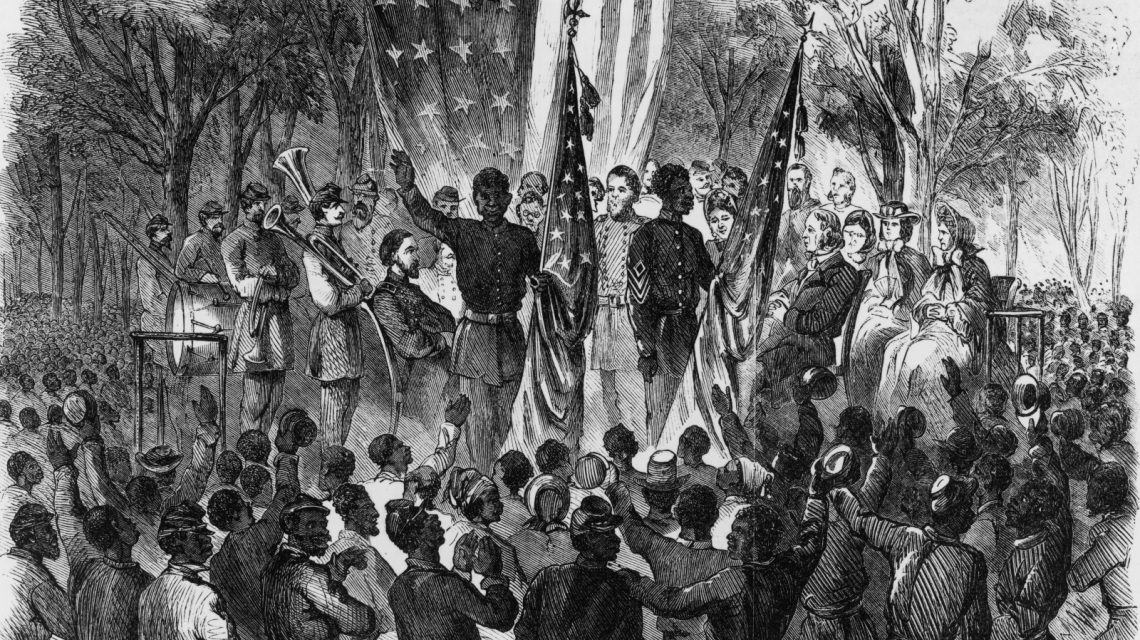
While Juneteenth is widely recognized as America’s best-known emancipation celebration, it is not the only one. The process of emancipation in the United States was complex and occurred over time, marked by various celebrations across the nation.
President Abraham Lincoln issued the Emancipation Proclamation on January 1, 1863. This proclamation declared the freedom of enslaved people within Confederate states. However, not all enslaved people were freed immediately; the journey to freedom was gradual and uneven.
Jim Downs, a historian at Gettysburg College, explained that emancipation is often mistakenly viewed as a single event linked to the Emancipation Proclamation. In reality, the end of slavery involved multiple events, including self-liberation by enslaved individuals, military actions, state legislations, constitutional adjustments, and ultimately, the Thirteenth Amendment. This history is reflected in the existence of various Emancipation Days.
Understanding Juneteenth
Juneteenth is celebrated each year on June 19. It marks the day in 1865 when Union soldiers arrived in Galveston, Texas, informing 250,000 African Americans that the Civil War had ended and they were free. This momentous day became a state holiday in Texas in 1980 and was declared a federal holiday in 2021.
Despite Juneteenth’s significance, different states commemorate emancipation at various times. These celebrations acknowledge the diverse paths states took towards emancipation.
Emancipation Celebrations Across States
- Florida: Celebrates on May 20, the day Tallehassee proclaimed emancipation in 1865. In places like Key West, festivities began as early as 1863 due to the presence of the U.S. Army.
- Tennessee: Marks August 8 as Emancipation Day. Governor Andrew Johnson freed his slaves on this day in 1863, inspiring the first recorded celebrations in 1871.
- Mississippi: Different areas have unique celebrations. For instance, students at the Mississippi School for Mathematics and Science have marked May 8 since 2005, corresponding to the day in 1865 when Union troops arrived in Columbus.
- Washington, D.C.: Celebrates Emancipation Day on April 16, in memory of the 1862 liberation of over 3,000 enslaved individuals. Official since 2005, the day features parades and cultural events.
- Ohio: Honors September 22, the date of Lincoln’s preliminary Emancipation Proclamation in 1862. This became an official state holiday in 2006.
- Maryland: Emancipated enslaved people legally on November 1, 1864. Since 2025, this day is a state-recognized holiday.
Why Juneteenth Stands Out
Jim Downs noted that Juneteenth is the most recognized Emancipation Day not because it was the initial celebration, but because Black Texans retained and revered it through generations. As they moved across the country, these traditions spread, evolving into a national symbol of freedom and the ongoing journey toward complete liberation.
“Americans often want to identify a single date when slavery ended, but freedom arrived at different moments in different communities,” Downs explained.
Celebrations in locations like Washington, D.C., Maryland, and others demonstrate that emancipation was a varied and multi-faceted process. Juneteenth, along with other Emancipation Day celebrations, roots back to a robust tradition extending beyond just a single event in 1865.
Before the Civil War, African American communities even commemorated British Caribbean emancipation, using these moments both to celebrate and to advocate against ongoing U.S. slavery. Emancipation practices and traditions were established well before the more widely acknowledged dates.
“The history of emancipation is difficult to reduce to a single day because slavery did not end everywhere at once,” Downs stated.
Viewing multiple Emancipation Days as a tapestry of distinct struggles and experiences emphasizes that freedom was a complex achievement, realized through varied efforts across the nation.
 California Elections: The Ongoing Vote Count and Controversies
  Judge Overturns Trump-Era Immigration Policies
  Lawsuits Against Federal Government Following Pennsylvania Rally Shooting
  New Jersey Struggles with Protests Near Immigration Detention Center
 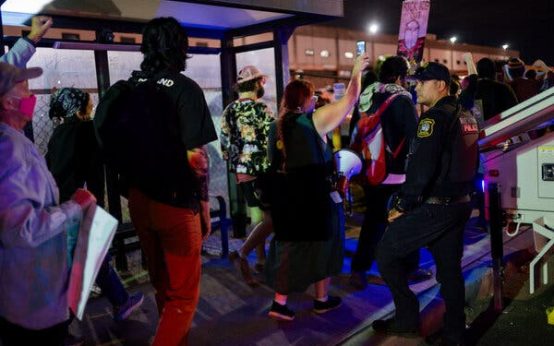 Newark Scales Back Police Presence at Detention Center Protests
  Investigation into Bus Company’s Network and Safety Violations