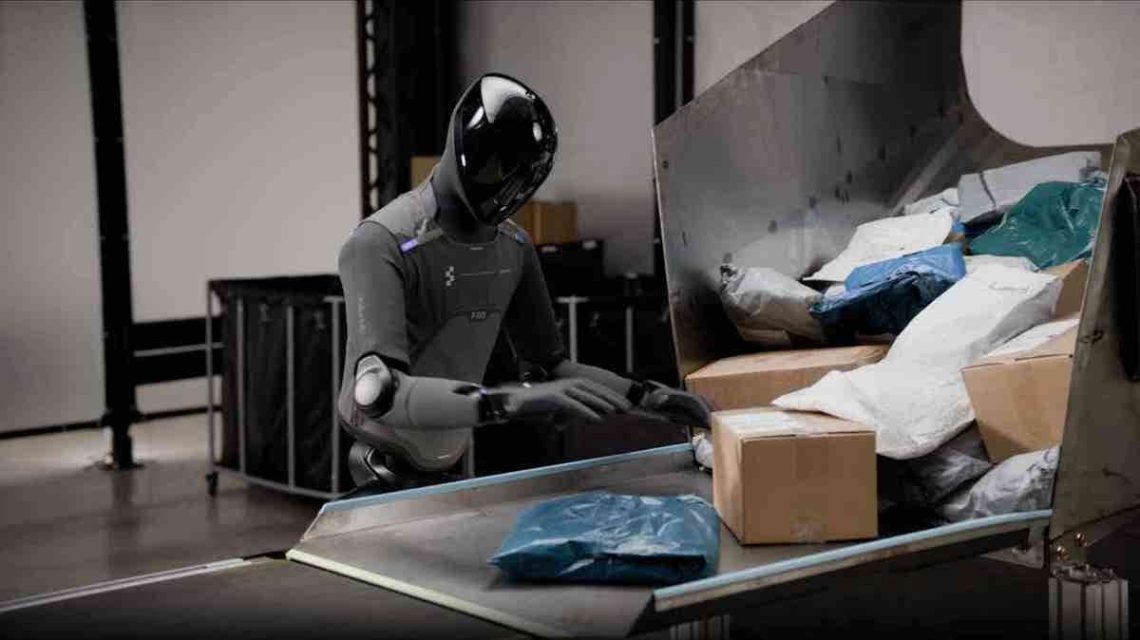
Humanoid robots have entered the workforce behind the scenes in a major retail operation. Figure AI has signed a commercial agreement with Catalyst Brands, which oversees popular retail brands like JCPenney, Aéropostale, Brooks Brothers, and others. The first deployment starts at Catalyst’s Reno, Nevada Distribution Logistics Center, focusing on warehouse and supply chain work.
Robots in Warehouse Operations
Catalyst Brands aims to use Figure AI’s robots to assist with repetitive sorting and packing tasks. These tasks are demanding and can wear down human workers over time. The robots will first work within Catalyst’s Joey Pouch sorting system at the Reno facility, which recently underwent a $40 million infrastructure update. This collaboration demonstrates the potential for technology to modernize operations and allow human workers to focus on more valuable tasks.
Despite the concern, Catalyst’s CEO, Marc Rosen, emphasizes that automating routine tasks can assist associates and enhance service quality across all brands. This detail highlights that the initial focus is on warehouse operations, not retail storefronts where customers might interact directly with humanoid robots.
Concern about Human Jobs
The introduction of robots in workplaces often sparks concerns about human job security. Catalyst’s collaboration with Figure AI is no exception. Although automation suggests a transition to higher-value work for human employees, the specifics on retraining or replacements remain unclear. Workers are concerned about how robots will impact their roles and whether robots might eventually replace human jobs. Companies must address these concerns transparently and provide clear communication regarding these transitions.
Uncertainty Surrounding the Deployment
Figure AI has yet to reveal several critical aspects of this agreement, such as the number of robots involved and the exact start date. It is also unclear whether Catalyst will purchase, lease, or adopt a robots-as-a-service model. Without these details, speculation and concern about the impact on human roles will persist.
Long-Term Impact on the Retail Industry
Retail companies are increasingly looking at automation to ease physical burdens in warehouse work. Figure AI’s humanoid robots offer an advantage because they can fit into existing structures designed for people. This means potentially faster product movement and reduced physical strain on human workers.
However, the full impact will be clearer once Catalyst decides if the successful test in Reno leads to expansion. The scope of deployment will indicate whether retailers are moving towards significant automation shifts. Watching how robots are integrated, the specific roles they play, and the financial implications will provide insights into the future of the retail industry.
As the industry considers these changes, clarity on how robots will transform employment and operational procedures is essential. Retailers need to provide concrete plans for integrating robots in a way that enhances, rather than diminishes, human contributions.
Consumers, workers, and the broader public have stakes in whether retail automation leads to more efficient operations, better product availability, and fair employment practices. The integration of technology should be a tool for improvement, not a replacement of human value in the workforce.
 Meta and YouTube Ordered to Pay Damages in Landmark Social Media Lawsuit
  60 Minutes Correspondents Decide to Stay Amid Crisis
  AI Impact: How AI Search is Transforming Professional Services and IT Budgets
  The Critical Role of Magnets in Modern Drone Warfare
  Rising Energy Demands Drive Innovative Solutions
  SpaceX Market Debut: Elon Musk’s Journey to Trillionaire Status