NABATIYEH, Lebanon – On Tuesday morning, Aida Jleilati and her daughter sifted through the debris of their former home in Nabatiyeh, southern Lebanon, to salvage belongings after it was struck by an Israeli airstrike in late May. They were among the few residents returning to assess their homes following a U.S.-Iran agreement to end the war between these nations and mandate a ceasefire in the Israel-Hezbollah conflict in Lebanon.
Despite ongoing hostilities in southern Lebanon, the conflict has de-escalated since the deal; displaced residents are returning to inspect their homes. Jleilati shared a three-story building with her daughter Sukaina al-Muhtadi; it collapsed due to the airstrike. They lived on the first floor, and the building housed six apartments.
“All that we have gathered in our life has been wasted,” Jleilati reflected, noting the total destruction that occurred during the May 26 attack. Al-Muhtadi first saw their destroyed home on social media.
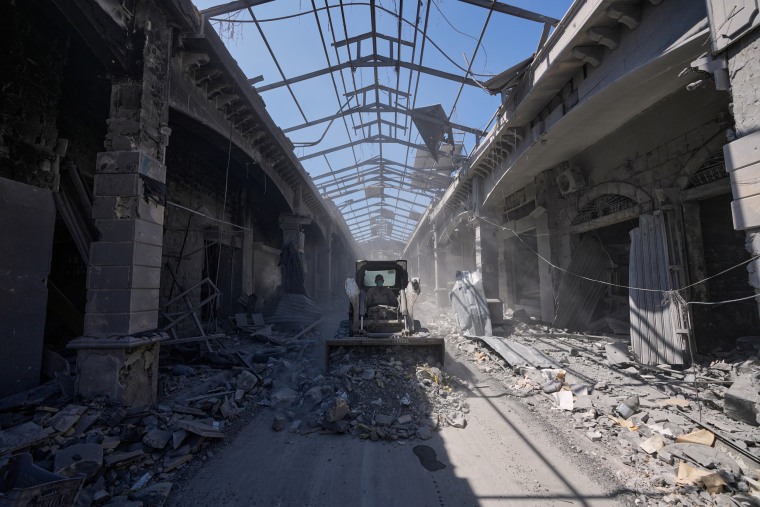
The historic city of Nabatiyeh faced severe airstrikes and shelling since the onset of the latest Israel-Hezbollah confrontation, causing numerous casualties. Once a vibrant market center, the city has suffered extensive damage. Bulldozers actively cleared rubble as people returned after the U.S.-Iran deal announced on the preceding Sunday.
Residents doubt the truce’s longevity, given past ceasefires since April 17 that proved unstable. Israeli forces progressed deeply into southern Lebanon, encroaching approximately 4 kilometers southeast of Nabatiyeh. This city holds historical significance as a trade hub renowned for its Monday market, where nearby villagers converge to sell goods.
A municipal worker operated machinery to clear debris in Nabatiyeh on Tuesday. The city’s importance traces back to its establishment post-Ottoman Empire in 1920. It has been a center for religious and cultural activities, deeply linked to Shiite clerical networks connected to Najaf and Karbala in Iraq.
Nabatiyeh served as the capital of the Shiite-dominated Jabal Amel region. Prominent Shiite scholars from here played roles in Iran’s 16th-century cultural transformations. The area remains central to Ashoura, a solemn Shiite observance marking the martyrdom of Imam Hussein.
Kamel al-Kamel, a 75-year-old resident, witnessed his business, a supermarket and coffee roastery, devastated. He estimated his losses at $2.5 million and lamented the significant destruction, noting this war exceeded the devastation of past conflicts including the civil war and previous Israel-Hezbollah wars.
“Thank God we are still alive,” he said, recounting his sorrow upon returning to Nabatiyeh.
Meanwhile, Samar Zuraik discovered her home’s structural integrity but mourns the loss of her son Ali, killed in an Israeli airstrike. Despite the U.S.-Iran agreement, she describes Nabatiyeh as unlivable due to ongoing shelling and utility outages.
“I wish I lost my house and my son stayed alive,” Zuraik expressed.
The city hosts three major hospitals, including Najdeh El Chaabiyeh Hospital, which handled numerous war casualties. Dr. Shafi Fouani, its medical director, compared the conflict’s severity to previous wars, noting over 500 deaths and treating 1,200 patients during this period. Lebanese Health Ministry reports indicate over 3,800 deaths in the recent conflict.
Israel continues operations with artillery targeting Nabatiyeh outskirts while Hezbollah retaliates. The ongoing combat resonates through the city, complicating civilian life.
Amidst the destruction, al-Muhtadi found a watch from her childhood among the ruins. As they prepared to return to a Beirut suburb, both women expressed a longing to return to Nabatiyeh when the conflict stabilizes and plan to rent there until rebuilding is feasible.
“We cannot live outside Nabatiyeh,” al-Muhtadi stated.
 Great Britain’s Social Media Ban for Kids Sparks Tensions with Trump Administration
  G7 Summit Focuses on Ukraine as U.S. Considers Reimposing Sanctions on Russian Oil
  World Cup 2026: A Tournament of Surprises and Triumphs
  G7 Leaders Converge with Diverse Goals
  G7 Leaders Show Cautious Optimism Amid Tensions
  Yerba Mate’s Global Journey: From South America to the World Cup