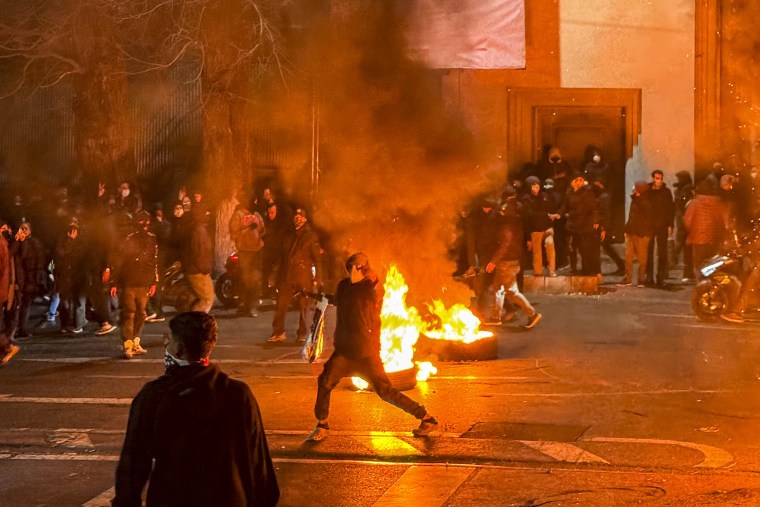
Iranian politician Masoud Pezeshkian expressed embarrassment on behalf of his government as they navigate the challenges of dealing with internal unrest and external diplomatic pressures. According to the U.S.-based Human Rights Activists News Agency, the death toll from the recent disturbances in Iran has reached nearly 7,000 people. This figure is verified through a network of activists operating in Iran and undergoes rigorous internal validation. In contrast, the Iranian government previously reported the official death toll as 3,117 last month, although NBC News has not been able to independently verify these numbers.
Meanwhile, former President Donald Trump warned of potential U.S. military intervention if the Iranian regime were to engage in violence against protestors. Despite these threats, immediate military actions were withheld, though the U.S. has been strategically positioning its military forces in the region in preparation for possible future strikes or to leverage pressure in ongoing discussions with Iran.
On Tuesday, President Trump increased diplomatic pressure by indicating the potential deployment of a second U.S. aircraft carrier to the Persian Gulf, where the USS Abraham Lincoln already resides. “We have an armada that is heading there and another one might be going,” Trump stated during an interview with Axios. He also mentioned that time was running out for Iran to engage in negotiations for a fair deal, suggesting a massive military buildup might ensue if talks fail to yield progress.
With the brewing tension, Iran’s Foreign Minister, Abbas Aragchi, acknowledged the necessity to engage in talks with the United States, while concurrently preparing to defend against an escalation into broader regional conflict. In an interview with Israel’s Channel 12, Trump emphasized that the U.S. might resort to decisive actions if negotiations do not result in a suitable agreement, particularly addressing not only Iran’s nuclear intentions but also its ballistic missile capabilities and support for groups like Hamas and Hezbollah.
The anticipated meeting between President Trump and Israeli Prime Minister Benjamin Netanyahu in Washington underscores efforts to shape any potential agreement with Iran. Although initially planned later, Netanyahu’s visit was rescheduled to follow the recent U.S.-Iran discussions in Oman. Trump conveyed to Axios that any deal with Iran is a “no-brainer” to address its nuclear activities and suggested it should also encompass oversight of Iran’s ballistic missiles.
Iran, however, has consistently rejected the inclusion of its missile arsenal, one of the most extensive in the Middle East, in any negotiation terms. Advisor Ali Shamkhani reasserted Iran’s stance on Wednesday, stating through state-run news agency IRNA that Iran’s missile capability remains beyond negotiation. Israel stays apprehensive regarding Iran’s progression in weaponry enhancement, mindful of the damages following the 12-day conflict that transpired between them last year.
This comprehensive and escalating situation continues to draw international concern over the balance of regional stability and the implications of broader military involvement.
Reporter Yuliya Talmazan, representing NBC News Digital from London, contributed to this article. Additional contributions came from Reuters and The Associated Press.
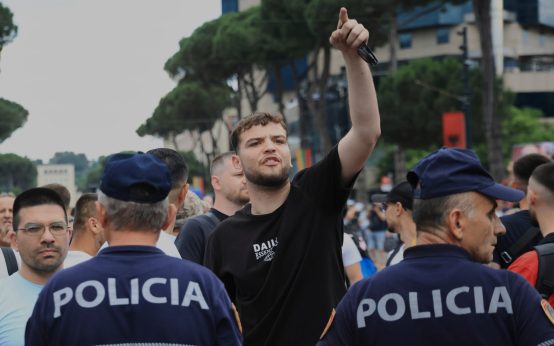 Protests Erupt in Albania Over Resort Development
 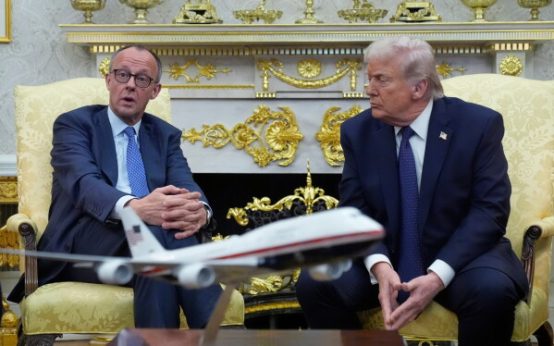 Clarity Sought on U.S. Troop Levels in Europe Amid Policy Changes
  U.S. Military Awaits Pentagon’s Clarification on Troop Levels in Europe
 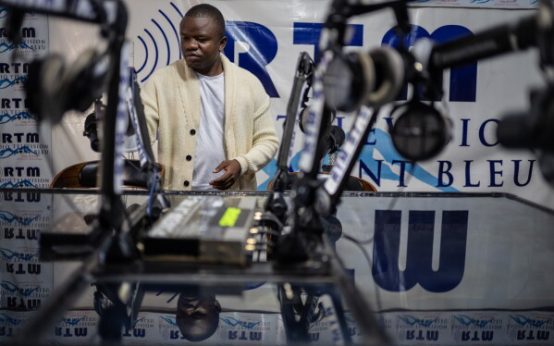 Potential Ebola Outbreak in Central Africa Raises Concerns of Rapid Spread
 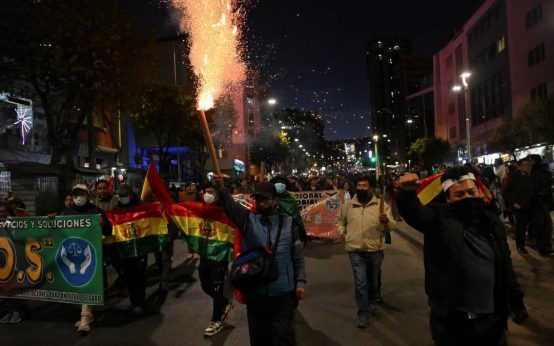 U.S. and Allies Condemn Efforts to Overthrow Bolivian Government
  Pamela Hicks: Cousin, Bridesmaid, and Witness to History