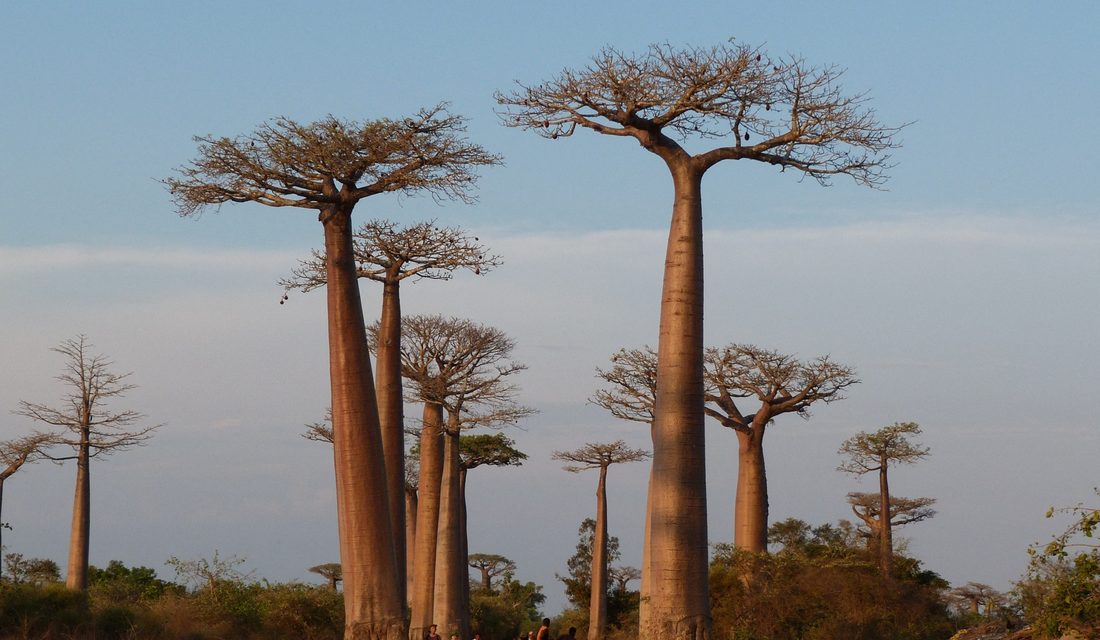
Baobabs, often referred to as the “tree of life,” feature thick trunks and a crown of branches with flowers that bloom at twilight. These trees, technically succulents, inspired Rafiki’s home in The Lion King. Scientists have identified eight species of baobabs, all adapted to dry climates and serving as crucial resources for local ecosystems.
These trees play significant roles not only in the environment but also in the diets and folklore of local communities. Their geographic origin, however, has been debated, with theories pointing to sub-Saharan Africa, western Australia’s Kimberley region, and Madagascar’s dry forests.
To address these theories, an international research team from the Wuhan Botanical Garden at the Chinese Academy of Sciences conducted a study using high-quality genomic data from all eight baobab species. Recent advancements in genetics have made such sequencing processes more affordable and efficient. Through this research, combined with ecological analysis, scientists determined that Madagascar is the most likely origin of the baobabs. They suggest oceanic currents carried the baobab fruit to Africa and Australia, leading to the development of new species in these regions.
The team’s findings were published this week in the journal Nature. Wan Jun-Nan, the study’s first author, shared his fascination with baobabs, inspired by The Little Prince. He described his first encounter with a baobab in Madagascar as a moment that sparked his interest in the trees’ evolutionary history.
The future of baobabs, however, remains uncertain. Three Malagasy baobab species face the threat of extinction. Adansonia perrieri is critically endangered, while Adansonia grandidieri and Adansonia suarezensis are endangered. The expansion of deforestation and rising sea levels threaten the baobab’s natural range, as well as the habitats of their pollinators, such as fruit bats and hawks.
Wan hopes that ecologists will use the genetic insights from this study to enhance conservation efforts for these unique trees.
 Flesh-Eating Fly Returns to the United States Causing Concern
  Australia’s Largest Seizure of Exotic Invertebrates: Over 100,000 Cockroaches Confiscated
  Gene Editing in Human Embryos at Columbia University
  NASA Declares MAVEN Spacecraft Dead After a Decade of Mars Observations
  WHO Reports Reduction in Suspected Ebola Cases in Central Africa
 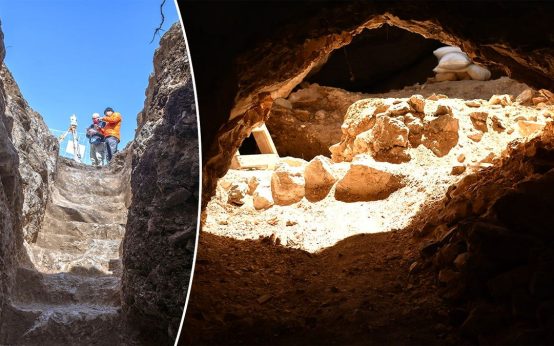 Ancient Tunnel Discovery Near Jerusalem’s Ramat Rachel