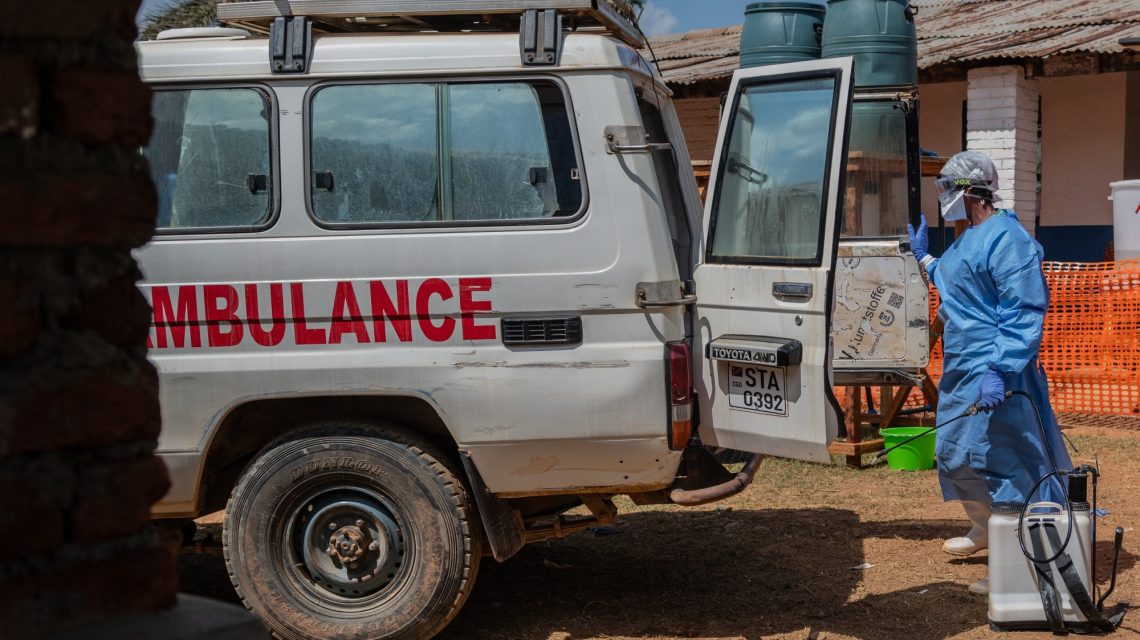
An ambulance at the Mongbwalu treatment center in Congo is undergoing disinfection after transporting a suspected Ebola patient. The recent outbreak of Ebola, caused by the Bundibugyo virus in Congo and Uganda, has led to 617 confirmed cases and 117 deaths.
The U.S. administration plans to establish a quarantine and treatment facility for Americans possibly exposed to the virus at a military base in Kenya. This proposal is facing criticism and legal challenges. Healthcare experts in the U.S. have raised concerns about the clinical, ethical, operational, and legal implications of this strategy.
Reflections on Past Outbreaks
Ebola outbreaks are not novel occurrences. The outbreak in Western Africa from 2014 to 2016 resulted in over 28,000 cases and more than 11,000 deaths, with a fatality rate of 39 percent. During that period, the U.S. implemented measures at international airports to curb the virus’s entry. Prior to these measures, the U.S. confirmed four cases and recorded one death.
The U.S. built medical facilities to treat and manage Ebola patients while preventing its spread. Such facilities continue to exist today, offering treatment for those infected. Significantly, the U.S. also led a global coalition that established a humanitarian aid structure to combat the outbreak.
Current U.S. Public Health Challenges
Today’s situation differs, as the U.S. public health framework has weakened over the past 17 months. The U.S. Agency for International Development is no longer present in Congo to provide necessary support. Furthermore, the Centers for Disease Control and Prevention faces budget constraints and political limitations that have affected its capability to respond effectively.
Containment as a Strategy
Infectious diseases can spread globally, making containment at their source a primary strategy. The CDC has dispatched personnel to the Democratic Republic of Congo but the current effort lacks the robustness seen a decade ago. The situation is worsened by the U.S. withdrawal from the World Health Organization.
The ongoing outbreak heightens the risk of its spread beyond Central Africa. Air travel poses a potential pathway for the virus to reach other continents. The FIFA World Cup in North America could further increase this risk as international visitors gather.
Travel and Infection Risks
Individuals who have possibly been exposed to Ebola, especially U.S. residents, may seek treatment in American facilities. With Ebola’s incubation period lasting up to 21 days and medications capable of temporarily suppressing symptoms, efforts to keep at-risk citizens out of the country might prove ineffective.
Prolonged continuation of the outbreak in Congo complicates containment efforts. While transmission primarily requires physical contact with bodily fluids, the risk is not zero. The State Department aims to protect Americans, yet no effective vaccines or treatments for the Bundibugyo virus exist, emphasizing the importance of containing the virus at its origin.
Lessons from Aviation Security
Strategies applied in aviation security can inform responses to the Ebola outbreak. Risk-based security, such as TSA PreCheck, targets resources according to identified risks. Adopting similar approaches to the Ebola crisis means prioritizing containment efforts at the source to safeguard global health.
Dr. Sheldon H. Jacobson, a Computer Science professor at the University of Illinois, and Dr. Janet A. Jokela, an infectious disease expert, underscore that understanding risk sources and deploying appropriate resources are vital steps in managing both man-made and natural risks.
As the Ebola outbreak continues, aggressive containment should remain a focal priority to protect health worldwide.
 Veteran News Anchor Bill Ritter Diagnosed with Alzheimer’s Disease
  Pope Leo XIV’s Unexpected Departure: King Felipe VI Lends a Hand
  Land Mines Continue to Devastate Families in Myanmar
  USMNT Starts World Cup with Convincing Win over Paraguay
  Hantavirus Outbreak on Cruise Ship Raises Concerns: A Closer Look
  Weston McKennie Set for Impact with USMNT