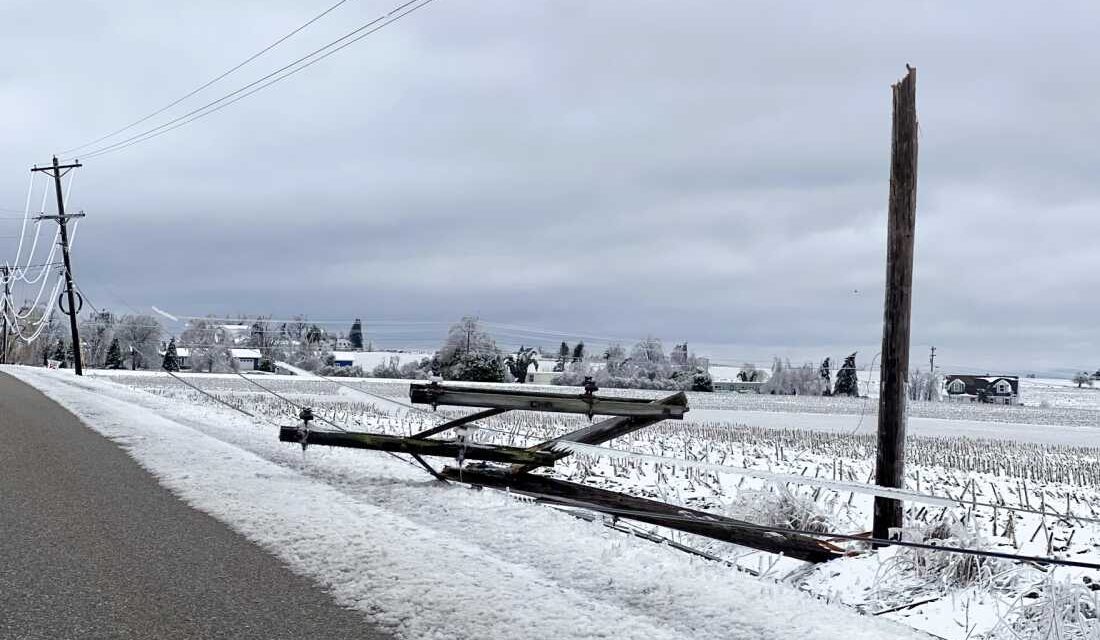
An ice storm in northern Michigan in March 2025 toppled trees and power lines, causing extensive damage and power outages. Experts indicate a warming climate might lead to more freezing rain rather than snow, potentially resulting in increased ice storms. The region must prepare for these changes by reconsidering existing power infrastructure.
According to a U.S. Department of Energy report, only about a fifth of the power lines in the country are underground. This is partly due to the significant cost difference compared to overhead lines. Northern Michigan utilities aim to increase the number of buried lines to combat frequent outages caused by severe weather.
During the March 2025 storm, Lewiston resident Wanda Whiting experienced the dire consequences firsthand. Her husband, Dave, required urgent hospital care amidst the blackout. Navigating dark, debris-laden roads, they managed to reach medical assistance, but the power outage in the area persisted for two weeks.
Richard B. Rood, a professor emeritus at the University of Michigan, emphasizes the necessity of adapting to an evolving climate landscape. He suggests that the power grid needs to reflect the changing weather patterns, which no longer align with past experiences.
Utilities like Michigan’s largest electric co-op plan to bury all future power lines underground to enhance reliability. Yet, they face significant financial challenges, with undergrounding costs ranging from $400,000 to $3 million per mile in urban areas. Despite these costs, many, including Traverse City Light & Power and Great Lakes Energy, believe the investment is worthwhile because it enhances service reliability long-term.
Shari Culver, chief operating officer for Great Lakes Energy, acknowledges the high costs involved but stresses the importance of preventing future outages. She points out that completely relocating existing overhead lines is financially prohibitive. Traverse City Light & Power’s Tony Chartrand highlights that despite the benefits, underground cables pose challenges such as increased labor for maintenance.
Aside from Michigan, utilities nationwide encounter similar issues. Andrew Phillips from the Electric Power Research Institute notes that many utilities are trying to bury more lines amid prolonged outages. However, this could lead to higher customer bills, a concern that requires customer buy-in and strategic planning.
Tao Sun, a researcher at Stanford University, advises utility companies to strategize well in advance of disasters and to involve communities early in the planning. This approach ensures smoother implementation and is exemplified by California’s PG&E shift to underground utilities following devastating wildfires.
Wanda Whiting reflects on the aftermath of the ice storm, expressing her hopes that underground lines could offer a better solution. The ice storm and its consequences have left local residents wary but determined to seek more dependable future infrastructure solutions.
 Lawsuits Against Federal Government Following Pennsylvania Rally Shooting
  Limited Interest in Arctic National Wildlife Refuge Oil Auction
  New Jersey Struggles with Protests Near Immigration Detention Center
  Newark Scales Back Police Presence at Detention Center Protests
  Investigation into Bus Company’s Network and Safety Violations
  Inflation’s Rise Challenges Economists’ Claims