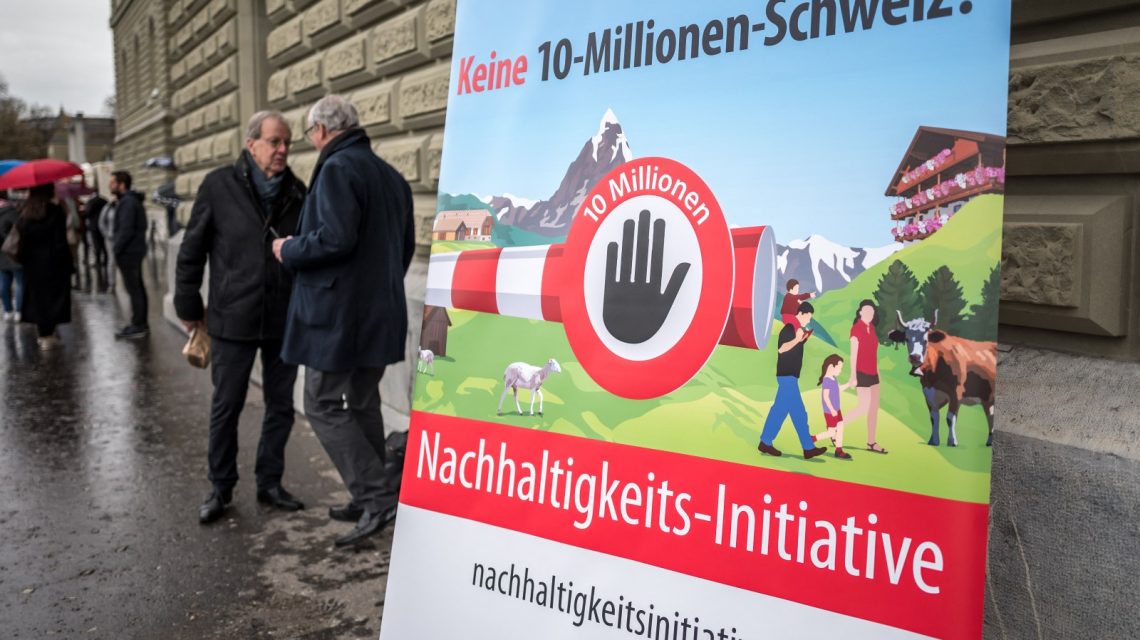
Swiss voters have chosen to reject a proposal aimed at capping the country’s population at 10 million. They prioritized economic stability and maintaining strong ties with Europe over restricting growth and immigration. The proposal, supported by the right-wing Swiss People’s Party (SVP), would have necessitated government intervention, potentially leading to the termination of key agreements with the European Union, if Switzerland’s population surpassed 10 million before 2050.
This debate mirrored those seen across Western countries, as the SVP argued that rapid population growth put pressure on housing, infrastructure, and public services. However, almost 55 percent of Swiss citizens voted against the measure, while 45 percent supported it, according to a preliminary referendum tally reported by Reuters.
Cloé Jans, a senior project manager at Swiss public opinion research firm gfs.bern, explained to Newsweek that the measure was viewed as ‘too extreme’ by voters. While the concerns around population growth, housing costs, and infrastructure were shared, the proposed solution was not acceptable to the majority. Campaigners against the measure effectively highlighted the risks it posed to Switzerland’s economy and its relationship with Europe.
The Problem Resonated, the Proposal Didn’t
Despite the proposal’s defeat, nearly half of the voters backed it, indicating the pressing nature of the concerns driving the initiative. Switzerland’s population has grown by nearly 2 million since 2002, rising from 7.3 million to over 9 million by 2025, following the introduction of freer movement between Switzerland and the EU, as per the Federal Statistics Office.
The SVP presented the initiative as a solution to the pressure on housing and services, expressing concerns that continued population growth could erode cultural traditions. The UBS Worry Barometer, an annual survey tracking voters’ top concerns, found immigration to be a significant worry (30 percent), behind health issues (50 percent) and the environment (31 percent).
Jans noted broad concern over these issues but emphasized the perceived extremity and infeasibility of the proposed solution. Research from gfs.bern showed Swiss voters generally support close EU ties and the free movement of people, yet they desire control over immigration numbers.
Economic and EU Concerns Shifted the Debate
According to Jans, the campaign against the measure shifted focus from daily frustrations to the potential risks associated with passing the proposal. The ‘No’ campaign united the Swiss government, major political parties, business groups, and unions, who cautioned that the proposal could harm the economy and put EU ties at risk.
Although not an EU member, Switzerland benefits from bilateral agreements granting access to parts of the EU single market and allowing free movement of people. Opponents warned the cap could threaten these arrangements. Jans stated that discussions on the impact on the labor market and healthcare system persuaded voters, especially against the backdrop of ongoing labor shortages in sectors like healthcare.
Foreign-trained doctors constitute around 43 percent of all physicians in Switzerland, according to the Swiss Medical Association’s 2025 report. The vast majority of the 165,386 foreign nationals who moved to Switzerland last year came for employment, with two-thirds originating from the EU or European Free Trade Association, per the Swiss State Secretariat for Migration’s 2025 report.
Jans concluded that many Swiss voters did not want to jeopardize their relationship with the EU. ‘In an uncertain world, a small country at Europe’s heart was not ready to risk breaking ties with the EU, which serves as a close and reliable ally,’ she explained. For many voters, maintaining a flawed status quo was preferable to taking unpredictable risks.
 Potential Impact of Inflation on Social Security Benefits Due to Iran Conflict
  2026 FIFA World Cup Kicks Off with Exciting Matches and Anticipation for Erling Haaland’s Debut
  Putin’s Obsession and Psychological Projection
  U.S. and Iran Move Toward Peace Amid War Tensions
  China’s Expanding Military Reach and Its Impact on Australia
  Death of Yemen’s ‘Spider-Man’ Sparks Dialogue on Extreme Climbing Risks