
With the summer vacation season approaching, travel plans face unprecedented disruptions. Ongoing geopolitical tensions, including the conflict involving the U.S., Israel, and Iran, have significantly altered flight accessibility, impacting traditional travel destinations like Dubai and other parts of the United Arab Emirates.
Meanwhile, in North America, Air Canada has reduced flights from New York’s Kennedy International Airport to Toronto and Montreal, attributing the decision to increased fuel costs. This change also reflects strained relations, as Canadian tourists react to perceived diplomatic tensions.
Within the U.S., major airlines have lessened seating capacity due to financial pressures. Cirium, an aviation analytics firm, reports that United Airlines has decreased its seat availability by 4.8 percent. The collapse of low-cost carrier Spirit Airlines — a result of surging operational costs — has further limited options by removing 2 to 3 percent of seats from the market.
These cutbacks, driven by the need to counterbalance elevated fuel prices, have resulted in raised fares. The air travel industry is projected to incur an additional $25 billion in jet fuel expenses in 2026 compared to prior forecasts, exceeding combined earnings in 2024 and 2025.
This predicament could extend beyond summer, affecting autumn and winter travel plans. Even if Middle Eastern oil exportation resumes, jet fuel supply issues and inflated prices may persist until 2027.
“Airlines waste fuel daily through inefficiencies like extended flight scheduling and complex air traffic systems,” said industry experts R. Michael Baiada and Robert W. Mann Jr.
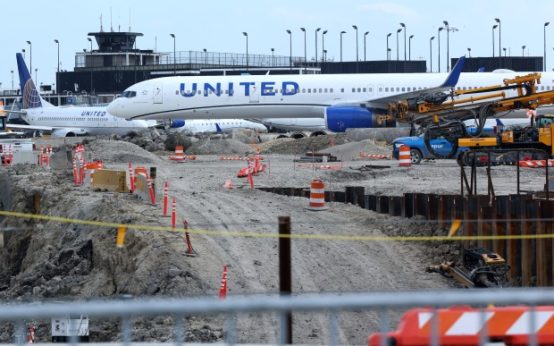
The Federal Aviation Administration (FAA) is also grappling with its own difficulties. A shortage of air traffic controllers and outdated systems have prompted preemptive reductions in flight schedules at airports, including Newark and LaGuardia. As a safety measure, the FAA recently mandated the removal of over 300 daily flights from Chicago’s O’Hare Airport’s operations.
In Europe, carriers are encountering fuel shortages, with daily deficits nearing 500,000 barrels. This shortfall arises because the continent primarily depends on Persian Gulf sources for its energy needs. European airlines have responded by reducing flight capacity by 5 percent, with some budget airlines, like Norse Atlantic, cancelling trans-Atlantic routes. Similar capacity adjustments are occurring across the Asia-Pacific region.
 Flying with Power Banks: Know the Rules
  Pennsylvania Amusement Park Offers Free Admission for Nearly 100 Years
  Events Around Chicago This Weekend
  O’Hare Airport’s Busy Summer Amid Flight Reductions and Airlines’ Strategic Moves
  Choosing the Perfect Suitcase for Your Needs
  Portal Lounge Brings High-Tech Experience to MSP Airport