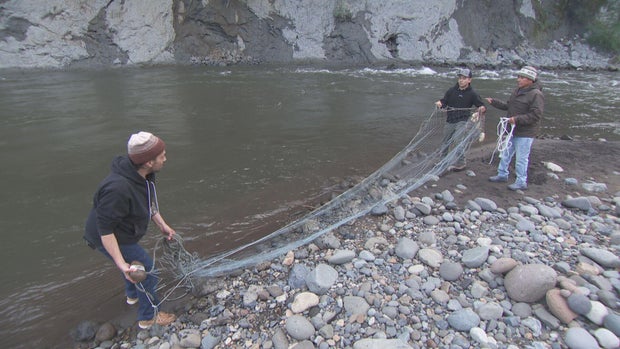
The Muckleshoot tribe, descended from the Duwamish and Upper Puyallup peoples, views salmon as much more than a source of food. For them, safeguarding salmon means preserving a long history of culture and tradition. Often referred to as the Salmon People, the tribe has historically been centered in the Seattle area for thousands of years.
The Legacy of Traditional Fishing
Tribal member Mike Jerry Jr., only 21 years old, experiences a profound connection with water and fish. He reflects on how that connection feels resonant within his body after fishing or swimming. Standing by a riverbank in Western Washington, his father Michael Jerry Sr. and uncle Cory Jerry arise early to teach him the age-old practice of casting a small net for spring salmon.
This traditional fishing aims to catch a single salmon at a time. After casting the net, patience is integral as the fishermen await the catch. Cory Jerry emphasizes the significance of the process, including preservation, drying, and smoking. “It’s fundamental to how we grew up,” he shares, “and crucial to pass on.”
Consistent with his family’s legacy, Jerry Sr. has shared his fishing art with his son, ensuring his connection to their history. “The experiences and memories are to be shared across generations,” he mentions, emphasizing its importance for their people.
Salmon’s Spiritual Significance
These fishing methods also hold spiritual value. Muckleshoot oral historian Warren King George explains that traditional teachings speak of salmon as relatives, visiting yearly. This relationship, exemplified by the Salmon Boy legend, established a promise between the salmon and the people. Salmon Boy vowed to maintain the habitats of the fish, while the salmon promised to return annually.
The Muckleshoot community honors this promise through yearly ceremonies, celebrating the first salmon of the season. King George describes solemn gatherings and feasts, thanking their returning relative for nourishing the people.
Struggles for Fishing Rights
Access to fishing has been historically challenging for Pacific Northwest tribes. King George recalls the first citation of a tribal member in 1892, fined for fishing outside the reservation. Big John, as he was known, faced fines, was forced to dismantle his fish weir, and was barred from traditional fishing.
King George notes their restricted rights, confined to reservations for fishing, hunting, and gathering. This resulted in conflicts during “The Fish Wars” of the 1960s. Protests and legal battles during this time highlighted the broader fight for resources.
The 1974 Boldt Decision legally affirmed tribes’ rights to half of the harvestable salmon, a crucial victory for the community’s fishing rights.
Present Challenges Facing Salmon
Phil Hamilton of the Muckleshoot Fish Commission highlights the tribe’s 2% stake in the global salmon intake. To secure ongoing opportunities, strong salmon populations are vital. Hamilton stresses the necessity to sustain salmon for future generations.
Environmental changes pose a major threat to salmon populations. The tribe’s efforts in habitat restoration aim to reverse alarming declines. Despite investments in conservation, habitat loss continues at a rate of 5% annually, making protection crucial.
Water purity remains central, as Hamilton asserts. Securing water through negotiated settlements has been key for sustaining salmon populations. Efforts have strengthened salmon numbers from a few dozen boats at the century’s start to support today’s 500 fishers and over 200 boats.
Hamilton values witnessing the satisfaction of fishers, considering it the most rewarding element of his work.
 YouTuber Shares Difficult Decision After Trisomy 21 Diagnosis
  The Changing Dynamics of Celebrity Reputation in 2026
  Robbers Sentenced for Theft of Romanian Treasures from Dutch Museum
  YouTuber Sparks Debate Over Abortion Rights and Down Syndrome
  Confronting the Truth Behind Sustainability Buzzwords in the Food Industry
  Celebrate America’s 250th Birthday with Commemorative Products