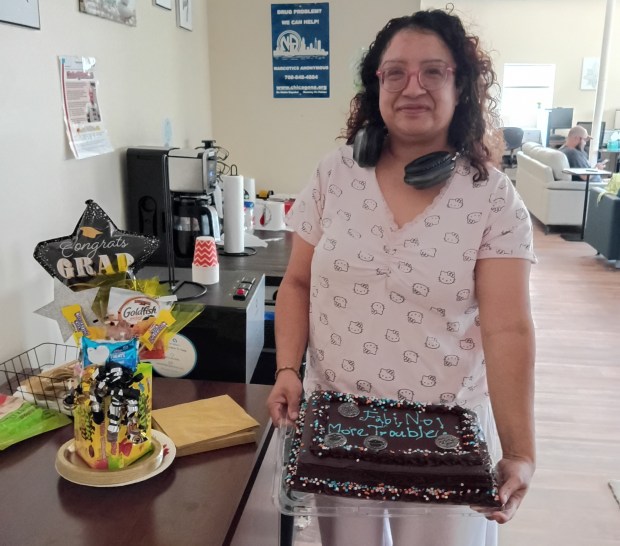
Will County recently marked the achievement of 1,000 graduates from its problem-solving courts. Program leaders highlighted its dual impact: reducing recidivism and providing graduates with sobriety and a renewed sense of purpose.
Positive Impact on Lives
Scott DuBois, the coordinator of the problem-solving courts, emphasized the program’s transformative effect on individuals. He noted that it instills hope and self-belief among participants who lacked it before, fostering healthy community relationships.
“It’s transformational,” DuBois said. “We’ve seen individuals transform their lives…develop healthy, stable, lasting relationships.”
DuBois also pointed out the broader benefits: graduates contribute to their families and communities, creating a ripple effect of recovery and life redefinition.
Origins and Growth
Will County State’s Attorney Jim Glasgow initiated efforts for a local drug court in 1998, obtaining federal funds to explore links between drug use and crime. With grants totaling $580,000, the first drug court launched in 2000.
The program has since expanded to include mental health and veterans courts, alongside the Redeploy Illinois program. These collectively form the problem-solving courts, aiming to lower incarceration rates, address addiction, and facilitate community reintegration.
Success Stories
Participants in these courts report receiving personalized therapy and essential resources. Fabiola Findlay from Joliet, part of the mental health court, shared her experience of life change and sobriety through the program. She now leads a recovery group, guiding others toward recovery.
Findlay expressed how the program built her self-esteem and self-love while holding her accountable.
“You are taught to accept yourself for who you are,” Findlay said. “I feel proud of myself. I value my life. My self-esteem has improved. I love myself.”
Program Structure
Participants must apply to join the problem-solving courts, meeting criteria like nonviolent offenses and judge approval. The program, structured in five phases, starts with halting drug use and connecting with community services.
The comprehensive support from case managers covers employment, education, financial accountability, and relationship building. Partnerships with the Workforce Center of Will County enhance vocational skill development.
Alumni Engagement
Graduate Magdalena Campos leads the alumni group and plans events to maintain connections among graduates. She underscores that connection counters addiction, encouraging ongoing support and interaction.
“Connection is the opposite of addiction,” Campos said. “We need to reach out to our peers to have a meaningful, long recovery.”
Campos herself celebrates four years of sobriety and actively contributes as a certified national peer recovery support specialist.
Program Efficacy
About 80% of participants graduate, significantly reducing repeat offenses. The recidivism rate for graduates is approximately 14% in the first year and 24% within five years, compared to 75% for those outside the program.
The program’s annual cost per participant is approximately $3,000, in stark contrast to $52,000 for a year of incarceration.
Glasgow affirmed that transforming individuals into productive citizens benefits the community and reduces habitual offenses. He shared an inspiring account of a program participant’s unrecognized heroism, underscoring the potential nurtured through the courts.
 Texas Highway Plane Crash Investigation
  Lake County Declares Local Disaster Emergency After Tornadoes
  Analysts Predict Delayed Relief in Gas Prices Amid U.S.-Iran Peace Deal and Approaching Storm
  Tragic B-52 Crash at Edwards Air Force Base Claims Eight Lives
  Monitoring of Potential First Storm in 2026 Atlantic Hurricane Season
  New York City Hosts Championship Ceremony for Knicks