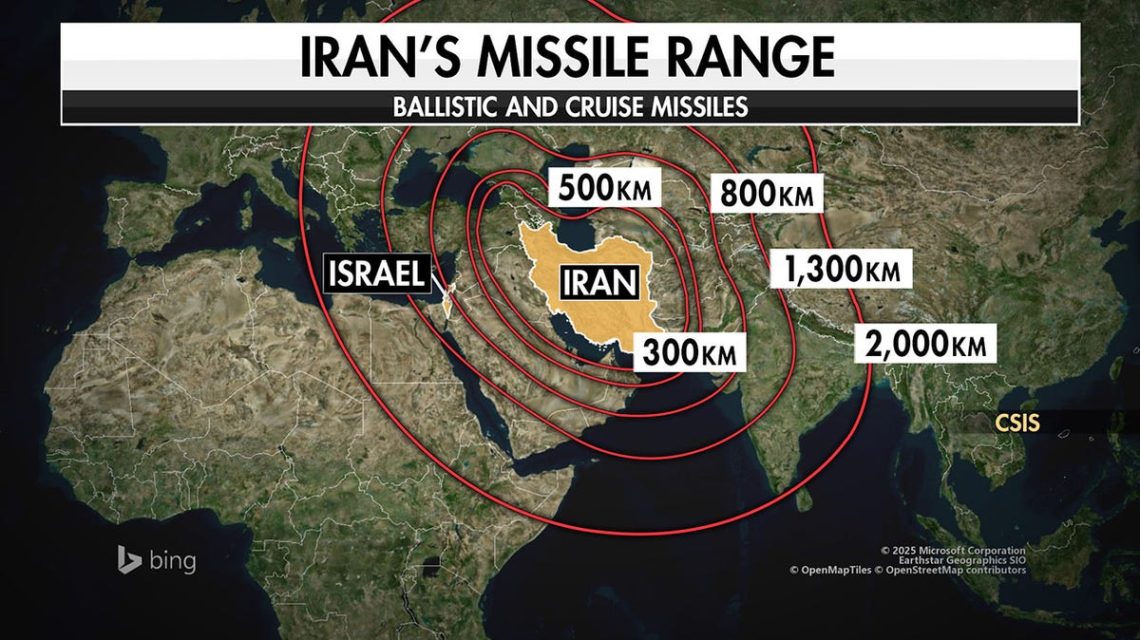
Senior officials from the Trump administration frequently highlighted Iran’s ballistic missile arsenal as a critical factor in its nuclear ambitions. This concern led to the launch of Operation Epic Fury against Iran. However, President Donald Trump has recently suggested that Iran having missiles may not be a significant issue.
At the G7 international forum, Trump stated, “If other countries have them, it’s a little bit unfair for them not to have some. If Saudi Arabia and Qatar, and they all have some, I would say that in relative proportion, I think it’s okay.” He questioned whether it was logical to allow Saudi Arabia to have missiles but not Iran.
Trump emphasized that missiles don’t pose a planetary threat and pointed to Gulf nations addressing non-nuclear and ballistic missile issues. The conversation also included discussions on Iran’s terrorist proxies, a key regional concern.
“Iran can never have a nuclear weapon, and we will not allow Iran to hide behind the immunity of a massive short-term ballistic missile inventory,” said Secretary of State Marco Rubio. He emphasized that Iran’s missile force provides a protective shield for pursuing a nuclear program.
Trump’s recent comments at the G7 diverged from previous administration stances that put Iran’s missile force as a threat to regional security. Senior officials like War Secretary Pete Hegseth and White House Press Secretary Karoline Leavitt had focused on destroying Iran’s missile capabilities as a priority.
Operation Epic Fury had clear objectives, including the destruction of Iran’s air and naval forces and drastically diminishing its missile launching capabilities. Marco Rubio underscored that these actions aimed to prevent Iran from using military power to obscure nuclear weapon development. He stated, “This is about very specific objectives,” highlighting the importance of these goals in maintaining security.
Trump’s remarks at the G7 also introduced questions about the U.S.’s strategy towards Iran’s nuclear program. A framework agreement with Iran proposed 60-day negotiations over Iran’s uranium stockpile and future enrichment activities. While Iran’s agreement to dilute its stockpile was seen as a significant concession, the memorandum did not settle whether Iran could retain enrichment capabilities.
Reflecting on Iran’s nuclear power, Trump showed a potentially more flexible stance by acknowledging the difficulties in denying nuclear access for peaceful purposes, especially when neighboring states possess similar capabilities.
The administration had previously maintained a stricter approach to Iran’s nuclear program, with no tolerance for Iran retaining even minimal enrichment capacity. However, recent developments and Trump’s statements suggest a more nuanced discussion of Iran’s nuclear and missile capabilities moving forward.
 Congress Faces Challenges of Trump’s Iran War
  VP Vance Addresses US-Iran Nuclear Talks and Strait of Hormuz Security
  Legal Dispute Over Kennedy Center Renovations Unfolds
  Elon Musk’s Wealth Sparks Discussions on Economic Inequality
  Trump Criticizes Italian Prime Minister Over G7 Photo and Iran War Cooperation
  Internal Challenges Threaten Keir Starmer’s Leadership