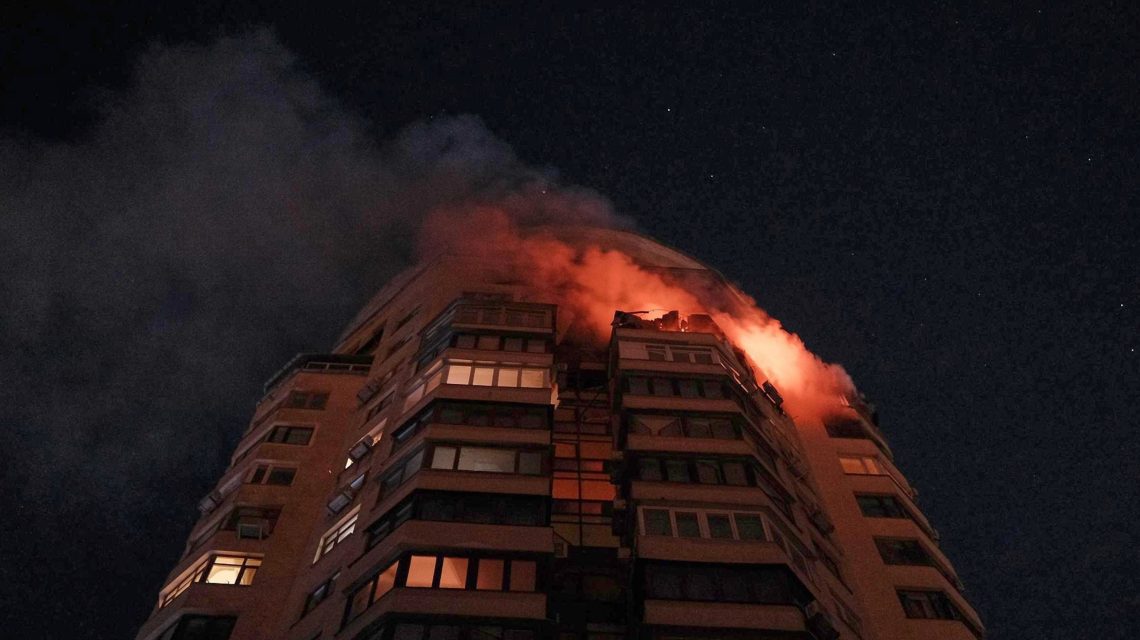
Ukrainian President Volodymyr Zelenskyy has called for “maximum pressure” from the global community on Russia after an overnight assault saw hundreds of drones and missiles launched into Ukraine, primarily targeting the country’s vital energy infrastructure.
According to Ukraine’s air force, Russia launched a total of 71 missiles and 450 drones in this latest attack. Of these, 38 missiles and 412 drones were intercepted or neutralized. However, 27 missiles and 31 drones managed to strike 27 different locations across the country. This attack represents the largest reported by the Ukrainian air force this year, with the most munitions launched in a single night since December 27.
In a Telegram post, Russia’s Defense Ministry stated that the assault targeted Ukraine’s “military-industrial complex and energy facilities,” along with areas for storing and assembling long-range unmanned aerial vehicles.
President Zelenskyy shared that the assault hit several regions, including Sumy, Kharkiv, Kyiv, Dnipro, Odesa, and Vinnytsia, with both energy infrastructure and residential buildings damaged. At least nine individuals were reported injured. Zelenskyy accused Russia of leveraging the coldest winter days to perpetuate terror rather than engage in diplomacy. He emphasized the necessity of timely air defense systems to protect Ukraine and highlighted that continued pressure on Russia is vital to ending the war. “Right now, Moscow is choosing terror and escalation, and that is why maximum pressure is needed,” he said.
Ukrainian Energy Minister Denys Shmyhal disclosed that thermal power plants powering parts of Kyiv, Kharkiv, and Dnipro were targeted. He stated the strikes aimed exclusively at civilian infrastructure, emphasizing the absence of military targets.
DTEK, Ukraine’s largest private energy company, reported significant damage to its power plants—the ninth such attack on its thermal power stations since October 2025. The company also mentioned emergency power outages in Kyiv’s Dnieper and Darnytsia districts, with additional damage in Odesa.
The state energy company, Ukrenergo, reported extensive power outages across regions including Kyiv, Kharkiv, Vinnytsia, and Odesa. These disruptions were attributed to the “massive” overnight attack that also damaged multiple energy facilities.
The assault followed a brief pause in attacks on energy infrastructure after the expiration of an agreement facilitated by U.S. President Donald Trump, which had paused such strikes. As temperatures plummeted to as low as -14 F, the latest strikes exacerbated the country’s difficult winter—a winter defined by Russia’s continuous attacks on Ukraine’s energy systems, resulting in power outages for millions.
Ukrainian Foreign Minister Andrii Sybiha and President Zelenskyy both suggested that Russian President Vladimir Putin postponed attacks until colder weather to inflict maximum hardship. Zelenskyy remarked, “The Russian army took advantage of the American proposal to pause the strikes for a short period, not to support diplomacy, but simply to stockpile missiles and wait for the coldest days of the year.”
The attacks coincided with upcoming trilateral peace talks between the U.S., Ukraine, and Russia set to continue in the United Arab Emirates. Despite these talks, Zelenskyy asserted that Moscow remains committed to war as opposed to seeking a diplomatic resolution: “Every such strike by Russia confirms that the attitude in Moscow has not changed: they are still counting on war and the destruction of Ukraine, and they do not take diplomacy seriously.”
NATO Secretary-General Mark Rutte visited Kyiv, meeting with Zelenskyy and addressing the Ukrainian parliament. Rutte acknowledged the progress in peace talks but highlighted Russia’s continued aggression: “This demonstrates their lack of seriousness about peace.”
The overnight attacks prompted NATO fighter jets in Poland to be put on alert even though no airspace violations occurred. German and Dutch defense systems were also on high alert. Meanwhile, Russia’s forces reportedly downed several Ukrainian drones, while Ukrainian forces targeted drone production facilities in Russian-occupied areas, responding to the night’s aggression.
 Latin American Deportees in Congo: Return to Home Countries Amid Challenges
  Controversy Surrounds Stabbing Incident of British Student
  Royal Cottages and Controversies: Financial and Legal Revelations
  Oak Lawn Librarian Supports Library Projects in Zimbabwe
  World Cup Anticipation: US Men’s National Team and Norway’s Viking-Themed Campaign
  Family Searches for Missing Auburn Student in Japan After Disagreement Over AI