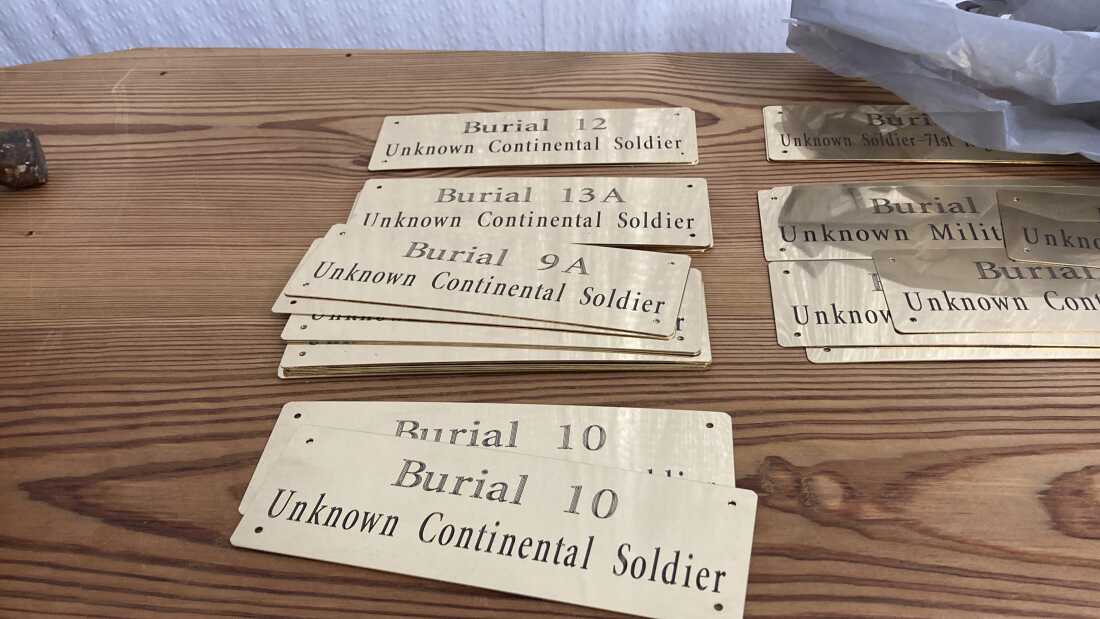
A recent discovery at the site of the Battle of Camden in South Carolina has brought attention to 14 unknown soldiers who are being reburied. DNA analysis has identified one of them as Pvt. John Pumphrey of the 7th Maryland Regiment of the Continental Army.
Journey of Pvt. John Pumphrey
Pvt. John Pumphrey enlisted in January 1777 as a teenager. He participated in significant battles, including Brandywine and Germantown in Pennsylvania and the Battle of Monmouth in New Jersey. He endured two harsh winters at Valley Forge and Morristown before heading south to confront the British once more. His journey ended at the Battle of Camden in August 1780, where he died from a British musket ball and was buried in a shallow grave.
Discovery and Identification
In 2022, archaeologists from the University of South Carolina uncovered Pumphrey’s skeletal remains. They performed DNA analysis to determine his identity. FHD Forensics, a company specializing in historical genealogy, identified Pumphrey’s remains. One of the matches was Nancy White from Maryland, who learned that Pumphrey was her fourth great uncle.
According to Allison Peacock, President of FHD, three types of DNA analyses confirmed Pumphrey’s identity. They found approximately 20,000 matches with modern relatives. These discoveries resulted from collaboration among family members who helped gather genealogical records.
An Unlikely Soldier
Nancy White’s family had been researching their genealogical history and enrolled in a DNA database. They knew of the Pumphrey family line but doubted their connection due to their family’s Quaker heritage, known for pacifism. Pumphrey lost his parents young and joined the army, re-enlisting despite the army’s short personnel due to his connection with it.
Challenges of Identification
Peacock noted that identifying Pumphrey was a challenging task due to the time elapsed. The genetic distance posed difficulties in ensuring enough DNA relatedness to identify the remains accurately.
Excavation of the Battlefield
James Legg and Steve Smith, archaeologists from USC, led the excavation. They found 14 sets of remains, influenced by COVID-19 lockdowns to conduct metal detection surveys. Legg revealed that graves were shallow, around 14 inches deep. Rick Wise from the South Carolina Battleground Preservation Trust explained that practicality and lack of tools resulted in such shallow graves.
Peacock is tracking relatives for another set of remains, surprising her by being potentially related herself.
The Battle of Camden
Wise recounted the Battle of Camden as a significant loss for the Continental Army. Despite their numerical superiority, they were overwhelmed by a British bayonet charge. Pumphrey’s unit was left outnumbered and surrounded. Many on the right side, including Pumphrey, did not survive. Wise suggested these men might have depended on each other until the end.
 Supreme Court’s Tariff Ruling: A Call for Fair Refunds
  Zimbabwean Green Card Holder’s Traumatic ICE Experience Sparks Therapy Plans
  Impacts and Reforms Following the Surfside Condo Collapse
  Chicago Area Historical Events: June 23
  Major Overhaul in U.S. Federal Student Loan System
  Detroit Archdiocese Considers Suspension of Weekend Masses Amid Challenges