
Juneteenth, a federal holiday, celebrates the emancipation of enslaved African Americans in the United States. Its recognition as a national holiday reflects a critical moment in American history. Yet, the establishment of widespread traditions for this occasion is still in progress.
Consider the symbolism reflected in the natural world. Take, for instance, the white oak in my backyard. This tree’s age is a testament to history. Experts estimate a tree’s age by measuring its trunk’s circumference at chest height. By such calculations, this oak has seen about 150 years, dating back to the post-Reconstruction era. Interestingly, its trunk diverges into multiple branches, forming an expansive crown. This complexity mirrors how the interpretation of history can depend on both the aspects chosen for measurement and the methods employed.
Juneteenth signifies more than a date; it represents ongoing reflection and recognition of a nation’s journey toward equality. Establishing stronger national customs around this day could enhance understanding and celebration of this significant historical event.
 CIC Theater’s Journey to Renewed Community Engagement
  Exploring the Shockoe Institute’s Efforts Through Art
 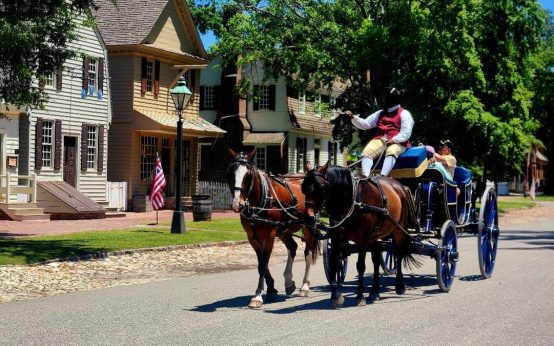 Colonial Williamsburg’s Role in America’s 250th Anniversary Celebration
  San Francisco Giants Face Backlash After Pride Night Incident
  Elliot Page Explores ‘Healthy Masculinity’ and Emotional Openness
  Lex Marie’s Art Explores the Complexities of Discipline in Black Households