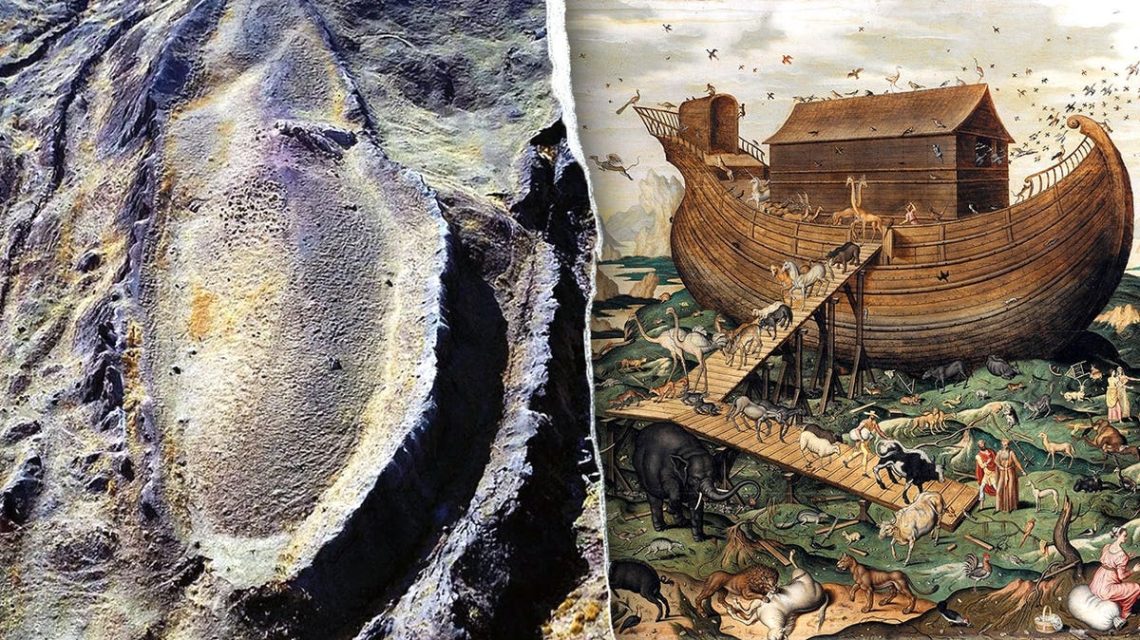
A researcher has introduced fresh soil data to bolster claims of finding the remains of Noah’s Ark. Andrew Jones from Noah’s Ark Scans presented these findings during an appearance on ‘Fox & Friends’. The team believes the Durupinar site in eastern Turkey houses the buried remnants of the biblical boat.
Background of the Durupinar Site
The Durupinar formation has been under study since the 1950s. Its potential connection to Noah’s Ark has sparked extensive debate through the years. Some geologists assert that the ‘ark’ is a natural formation. Others think the latest findings lend credence to the biblical vessel narrative.
A 1996 paper in the Journal of Geoscience Education disputed the ark hypothesis, stating the site comprised natural rock structures. However, new soil analyses are reigniting the conversation. Researchers found chemical differences in the site consistent with decayed organic materials, suggesting the possibility of ark remnants.
Compelling Evidence for a Man-Made Origin
Speaking to Fox News Digital, Jones remarked that the latest soil results might be the strongest indication of a man-made origin. He highlighted a ‘statistically staggering’ difference between soil samples from within and outside the formation. Organic matter tripled inside the boat-shaped contour compared to external soil.
This higher concentration of organic components could indicate decayed carbon-based materials like wood or animal matter. The 1996 publication by Lorence Gene Collins and David Franklin Fasold had dismissed Noah’s Ark claims, describing the site as a natural rock formation. The current soil analysis, however, highlights chemical variances beneath the surface.
Scientific Findings at the Formation
Samples gathered in 2024 revealed a significant 38% increase in potassium within the boat’s shape, a key indicator of wood ash, along with an eightfold discrepancy in pH levels. This dramatic pH shift implies a distinct chemical history for the internal environment versus the surrounding mountainside.
An eightfold pH difference and thrice the organic matter suggest a ‘closed system’ where biological materials decayed, releasing minerals into the surrounding soil and permanently altering its chemistry.
Continued Research and Debate
The implications of these findings might drive further discourse on the Durupinar site’s nature. Jones suggests that the internal complexities seem inconsistent with natural geological activities. The team urges Turkish scientists to undertake additional testing, including core drilling and advanced 3-D mapping.
Jones mentioned scan data indicating subsurface features. Earlier ground-penetrating radar scans dating back to 2019 had uncovered such anomalies. Fox News Digital had reported on Jones’ previous analyses of the formation’s potential organic material.
The research continues, aiming to determine if a man-made ark structure exists in the middle of a mountainside in the Ararat region.
 La Brea Tar Pits Begin Major Renovation to Enhance Ice Age Research
  Flesh-Eating Fly Returns to the United States Causing Concern
  Australia’s Largest Seizure of Exotic Invertebrates: Over 100,000 Cockroaches Confiscated
  Gene Editing in Human Embryos at Columbia University
  NASA Declares MAVEN Spacecraft Dead After a Decade of Mars Observations
  WHO Reports Reduction in Suspected Ebola Cases in Central Africa