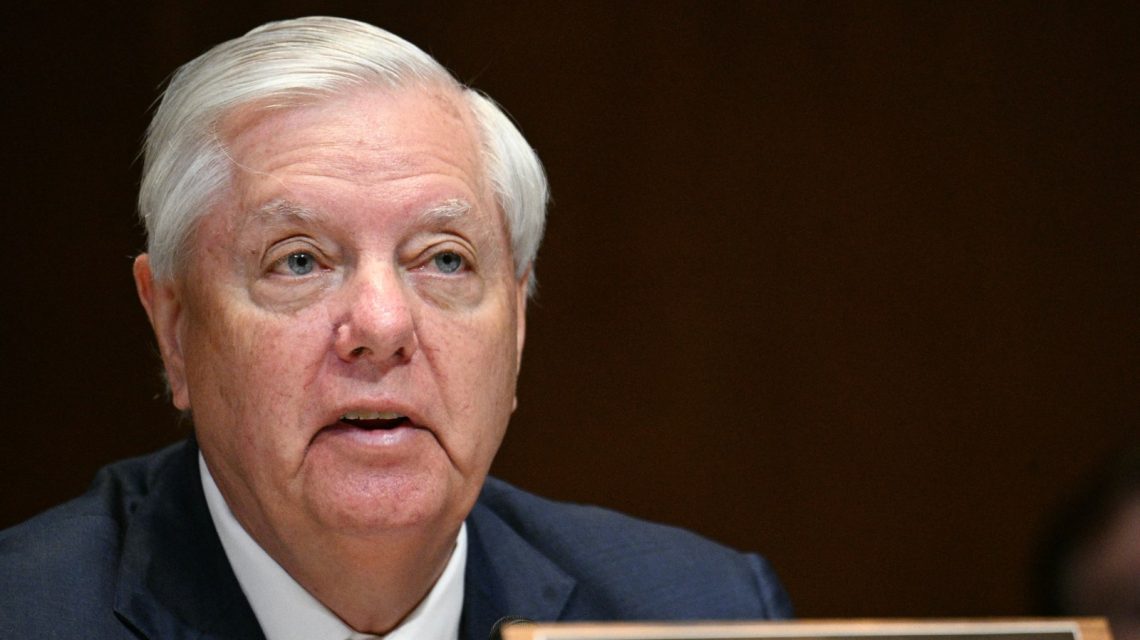
Republican Senator Lindsey Graham is seeking his fifth term representing South Carolina in the U.S. Senate. He faces Democratic challenger Dr. Annie Andrews in a closely watched race. Although South Carolina leans Republican, the contest has gained national attention.
Race Dynamics and Polling
Polls and betting odds favor Graham. However, he campaigns actively amid Republican dissatisfaction over issues such as the Iran conflict. Andrews’ successful fundraising has made her a competitive contender. As a pediatrician and former congressional candidate, she aims to leverage public discontent with Washington and highlight her healthcare expertise.
In recent primaries, Graham secured 58% of the vote, while Andrews obtained 61% in her race. This election occurs as control of the U.S. Senate is at stake, increasing its importance for both parties, even in States like South Carolina, typically considered Republican strongholds.
Insights from Polls
Polling for the general election in South Carolina is limited, with available data sponsored by Democratic groups. A February poll, backed by Andrews, showed Graham leading by 5 points. An earlier poll in November, by 314 Action, had him ahead by 6 points against Andrews and 2 points versus a generic Democrat.
Despite Graham’s lead, 57% of respondents indicated a preference for “someone else.” Only 34% held a favorable view of Graham, first elected to the Senate in 2002.
Campaign Spending and Election Ratings
Graham spent over $14 million in his primary to preempt a runoff. Having won, he is considered in a safer position. The Cook Political Report rates the South Carolina Senate race as “solid R,” indicating a likely win for Graham in the general election.
Prediction Market Trends
In prediction markets, Republicans have a significant advantage. Kalshi places GOP chances at 78.8% compared to Democrats at 21.2%. The gap has decreased over time. In January, Republicans enjoyed over 90% odds, in contrast to Democrats at less than 10%.
Polymarket reports similar figures, with 81% Republican odds against 21% for Democrats. Like Kalshi, the gap has lessened from February’s 92% for Republicans to Democrats’ 8%.
Senate Control and Broader Implications
The race plays into a larger national struggle for Senate control. South Carolina isn’t a top-tier battleground, yet Democrats need four additional seats to regain Senate dominance. The Cook Political Report forecasts Republicans maintaining a slight majority.
Although viewed as a secure Republican seat, events could alter its significance. If Andrews exceeds expectations, it would require a strategic resource shift.
Advantages and Challenges for Andrews
Andrews presents a profile intended to resonate beyond traditional Democratic voters. As a Charleston-based pediatrician, she highlights affordable healthcare, public education, and economic issues.
She describes her candidacy as an outsider’s challenge to established political interests. Andrews used her medical background during a measles outbreak to communicate public health information, linking it to broader themes of government stewardship.
Her potential appeal particularly resonates with parents, especially mothers. Andrews’ fundraising reached over $8 million since May 2025, surpassing Graham, who raised $7.7 million in the same period.
Despite her advantages, Andrews faces obstacles. Her previous congressional run in 2022 ended in defeat. Historically, Democrats struggle in statewide South Carolina elections.
Historical Context
The last Democrat winning a U.S. Senate seat here was Senator Fritz Hollings in 1998. Since then, Republicans have controlled most significant positions.
South Carolina’s GOP alignment is strong; it hasn’t favored a Democratic presidential candidate since 1976. Even in tight contests like the 2020 race, Republicans hold major margins. Graham, despite challenges, remains the projected favorite supported by historical trends and incumbency.
However, polling demonstrates areas of potential vulnerability for Graham, with close past margins. Andrews’ challenge involves turning openings into a coalition, broadening her support while navigating a traditionally challenging environment.
What Lies Ahead
South Carolina voters will make their choice between Graham and Andrews in the November 2026 general election. Early voting and other key dates will unfold leading up to Election Day.
Watch for new polling and strategic spending changes. Limited information means fresh surveys or significant advertising purchases could indicate shifts in the race’s dynamics.
Turnout and independent voters are crucial to Andrews’ path, while Graham will focus on maximizing GOP participation in the state.
National stakes might affect the race, redirecting resources if Senate control appears hinging on South Carolina.
 Concerns Over Election Security and Federal Involvement Escalate
  Senator Lindsey Graham and UFC CEO Dana White Criticize Fighter Josh Hokit for Comments on Michelle Obama
  G7 Summit Focuses on Russia-Ukraine Conflict as Trump and Zelenskyy Set to Meet
  Senators Seek Clarity on US-Iran Agreement
  Iran’s Struggle for Independence and Global Realignment
  Emerging Political Movement Strives for Unity in Israel